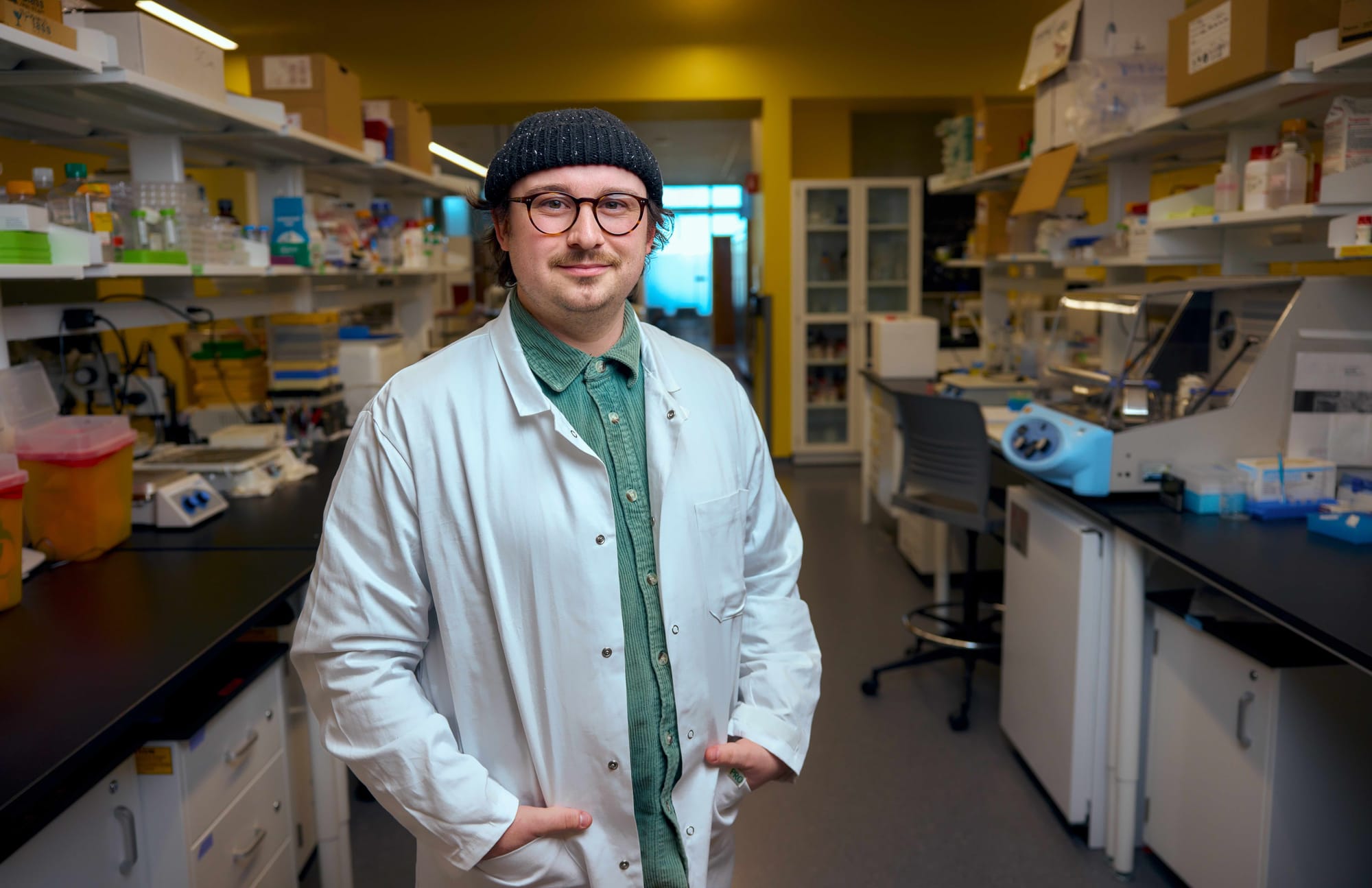
For Jackson R. Ham (BSc ’19, MSc ’21, PhD ’25), graduate school was never just about the research — it was about the people, the questions and the unexpected directions that made the work worth doing. As a doctoral researcher in behavioural neuroscience, Ham spent years studying social play in rats, uncovering how early experiences shape the brain and behaviour in ways that matter far beyond the lab.
Meet Jackson. Medals won: Governor General's Gold Medal for Graduate Studies; School of Graduate Studies Medal of Merit – Doctor of Philosophy
Program: PhD – Behavioural Neuroscience
Describe your ULethbridge experience in three words.
Mentorship. Growth. Discovery.
Why did you choose ULethbridge for your graduate studies?
For me, choosing a graduate program was less about the institution in the abstract and more about finding the right mentorship environment. Dr. Pellis' research program aligned closely with my interests, and I was excited by the possibility of receiving mentorship in a lab where I could ask questions about social behaviour, individual differences and animal models in a rigorous and creative way.
What did your research and/or thesis work encompass?
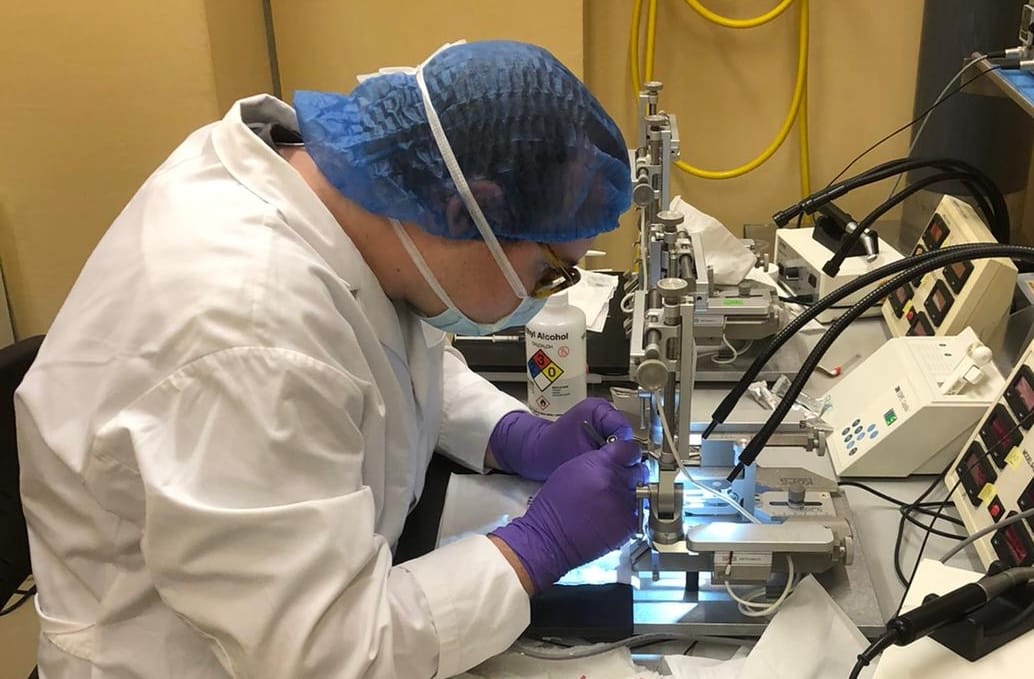
My thesis focused on social play in rats and how early play experiences shape later social and brain development. Specifically, I studied rough-and-tumble play — the playful wrestling commonly seen in juvenile rats — and asked whether rats prefer certain play partners, what influences those preferences and whether differences in play experience have lasting effects.
Broadly, my research shows that early social experiences are not uniform, even among animals raised in similar environments, and that these individual differences can have important consequences for behavioural and brain development.
What drew you to your program or field of study?
I was drawn to neuroscience because I have always been fascinated by animal behaviour and by the question of why individuals behave differently from one another. Neuroscience gave me a way to connect those behavioural differences to development and the brain.
During my graduate studies, I became especially interested in social play because it sits at the intersection of behaviour, development and social experience. Rough-and-tumble play may look like simple wrestling, but it can shape social competence and brain development in important ways. That complexity is what made the field so exciting to me.
What is your most memorable ULethbridge experience?
My most memorable ULethbridge experience was defending my PhD dissertation. It marked the culmination of years of work, mentorship, collaboration and personal growth. It was also a moment where I could look back and appreciate not only the research itself, but the people who had supported me throughout the process — especially my supervisor, committee, lab colleagues, friends and family. It was a meaningful way to close one chapter and begin the next.
Did you have an experiential learning opportunity that deepened your work?
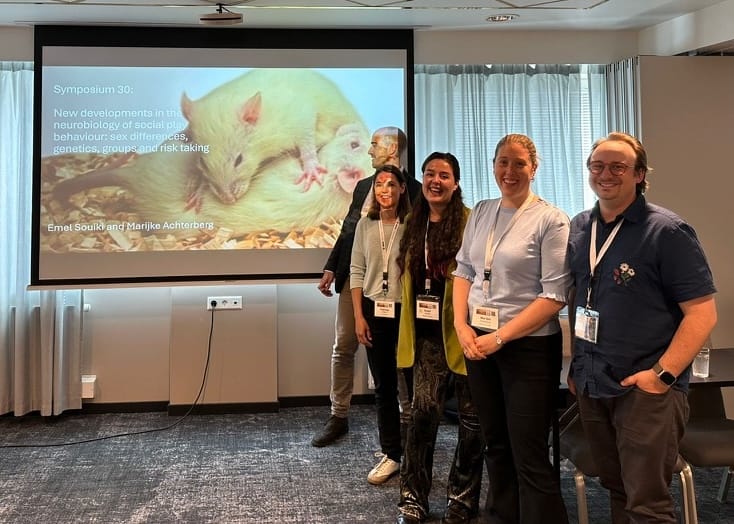
One of the most meaningful experiential learning opportunities during my PhD was the time I spent as a visiting researcher at Utrecht University in the Netherlands. That experience allowed me to work in a new research environment, build international collaborations and think about my own work from a broader perspective.
It deepened my understanding of social play research by exposing me to different approaches, ideas and scientific cultures. Connecting with researchers outside of my home institution helped me grow as a scientist and made my graduate work feel part of a larger international conversation.
Were there any experiences that changed your perspective?
My perspective was deeply shaped by the mentorship I received from my supervisory committee. Each committee member brought a different way of thinking about behaviour, neuroscience, research design and interpretation, and those perspectives helped me become a more careful and creative scientist.
My supervisor had the greatest influence on my development, but I also benefited enormously from committee members who challenged my assumptions, broadened my thinking and encouraged me to see my work from multiple angles.
Did you receive any scholarships, awards or bursaries during your studies? How did having financial support impact your education?
During my PhD, I was fortunate to receive several scholarships, awards and bursaries that supported both my research and professional development. These included an NSERC Alexander Graham Bell Canada Graduate Scholarship – Doctoral, the University of Lethbridge Graduate Research Award, the Alberta Graduate Excellence Scholarship and several smaller research, teaching, service, publication and travel awards. I also received support to present and collaborate internationally, including travel funding connected to the European Behavioural Pharmacology Society and the Dutch Neuroscience Meeting.
This financial support had a major impact on my education. It allowed me to focus more fully on my research, reduced financial pressure during graduate school and created opportunities that would have been much more difficult otherwise. In particular, travel and research funding allowed me to present my work, build collaborations and spend time as a visiting researcher at Utrecht University. Overall, this support gave me the stability and flexibility to pursue an ambitious research program and to grow as both a scientist and educator.
What does this academic recognition mean to you?
This recognition is incredibly meaningful because it reflects not only the final dissertation, but the years of work, persistence, mentorship and collaboration that made it possible. A PhD can be a long and challenging process, so to have that work recognized at this level is both humbling and encouraging.
It also reminds me how fortunate I was to be supported by my supervisor, committee members, lab colleagues, collaborators, friends and family throughout my graduate studies. Although the awards recognize academic achievement, I see them as a reflection of the community that helped me grow as a researcher.
What is the most important lesson you learned during your time at ULethbridge?
The most important lesson I learned during my time at ULethbridge was that good science is not done in isolation. My PhD taught me the value of mentorship, collaboration and being willing to have my ideas challenged. Working with my supervisor, committee members, lab colleagues and collaborators helped me see that research improves when it is shaped by different perspectives.
I also learned that scientific progress often comes from being open to unexpected results and following the data, even when it leads in directions I did not initially anticipate.
What are your plans for the future?
My immediate plan is to continue my research through a postdoctoral fellowship supported by the Alzheimer's Society Research Program. This project examines how social stability influences cognitive decline and memory in aged mice and a mouse model of dementia — allowing me to extend my interest in social behaviour and brain development into questions related to aging, cognition and neurodegenerative disease.
Longer term, I hope to build a career in academia. I am currently applying for faculty positions, with the goal of developing an independent research program that examines how social experiences shape behaviour, cognition and the brain across development and aging. I am also excited by the opportunity to teach, mentor students and contribute to the broader academic community.
What advice would you give to those who are about to begin their journey at ULethbridge? What would you tell your first-year self?
My advice would be to seek out good mentorship and to be open to where the experience takes you. Graduate school can be challenging, and it is easy to feel like you need to have everything figured out from the beginning. You do not. Some of the most important parts of my PhD came from asking questions, making mistakes, following unexpected results and learning from the people around me.
I would tell my first-year self to trust the process a little more. The skills, confidence and perspective that come from graduate school develop gradually. I would also remind myself to appreciate the people who make the experience meaningful — supervisors, committee members, lab mates, collaborators, friends and family. Looking back, those relationships were just as important as the research itself.

Welcome to the ULethbridge Alumni Family! Remember to stay in touch.
Stay connected with classmates, share your successes, mentor future ULethbridge students and enjoy Alumni perks and benefits!
Update your contact information with Alumni Relations
Find us on Facebook, Instagram or LinkedIn
Read more about other alumni