Three That Matter asks a simple question: Which three books have mattered most to you?
Following its initial launch in January 2026, this bookstore initiative has returned as an annual celebration of the books that have shaped members of our campus community.
Each week, a different member of the University community will share three books that have stayed with them, books they return to, wrestle with, or continue to think about long after the final page. The featured titles will be available through the University of Lethbridge Bookstore at a 20 per cent discount.
Together, these selections offer a glimpse into the ideas and stories that have shaped the people who teach, learn, work, and study here.
Three That Matter is an invitation to discover the people behind the reading lists, encounter something new, and maybe find a book that matters to you, too.
Terry Whitehead's Three That Matter
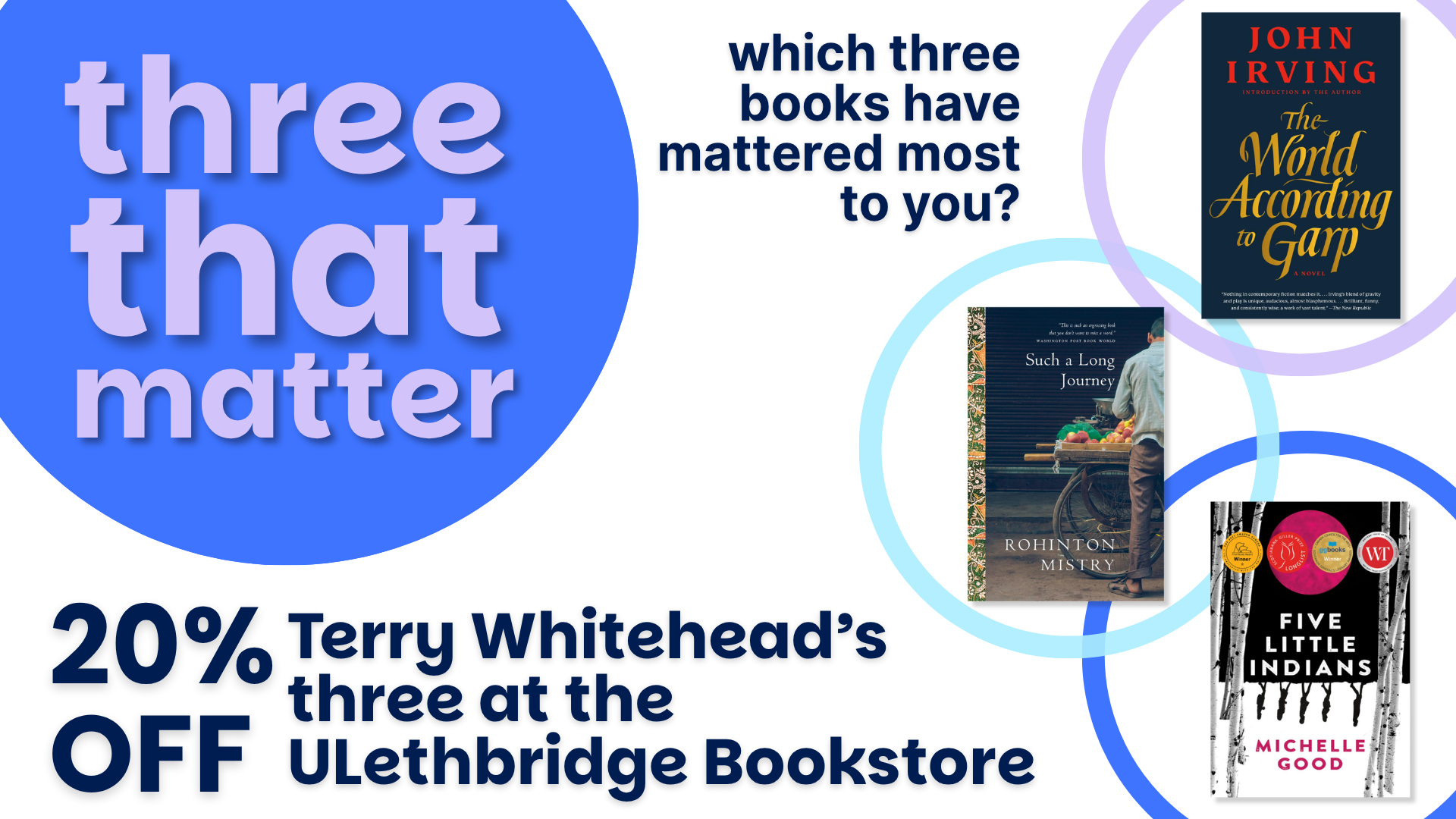
Book one: The World According to Garp by John Irving
Why it matters
I read this book in the 80s after seeing the film starring Robin Williams, Glenn Close and John Lithgow. John Irving was discussing themes in Garp — feminism, violence against women, gender identity — I hadn’t encountered in my high school reading. After reading Garp I was inspired to read more of his works – Cider House Rules, Hotel New Hampshire and A Prayer for Owen Meaney.
It’s not often that both a book and its film adaptation are incredible, but Garp is a shining example. And bonus! John Irving became a Canadian citizen in 2019.
Book two: Such a Long Journey by Rohinton Mistry
Why it matters
I was in an English class with former ULethbridge professor Rick Arnold. On the final day of class he referenced this first novel by Rohinton Mistry. I picked up a copy at B. Macabee’s Booksellers and immediately began reading it (when I should have been studying for exams). I was struck by Mistry’s ability to give voice to compelling characters struggling with personal issues and family dynamics set against larger themes and issues in contemporary Indian society. This was my first meaningful experience with post-colonial literature, and this novel led me to read more of Mistry’s writings, including his masterpiece, A Fine Balance.
This experience mattered to me as it led to more post-colonial readings by Chinua Achebe and Besse Head, also recommended by Dr. Arnold!
Book three: Five Little Indians by Michelle Good
Why it matters
This debut novel from Cree writer (and former Bridge Prize juror) Michelle Good is a heartbreaking tale of five residential school survivors who eventually end up in the Downtown East Side of Vancouver. The reader is left with a deeper understanding of the horrors and consequences of residential schools and their impact on families and Indigenous culture. It’s a great novel and should be required reading for every Canadian. I’m very eager to read her upcoming novel, Eliza Sunshine.
Closing thoughts
Although my three picks are all fiction, I learned long ago to have a fiction and non-fiction book on the go at the same time and to switch back and forth as the mood strikes!