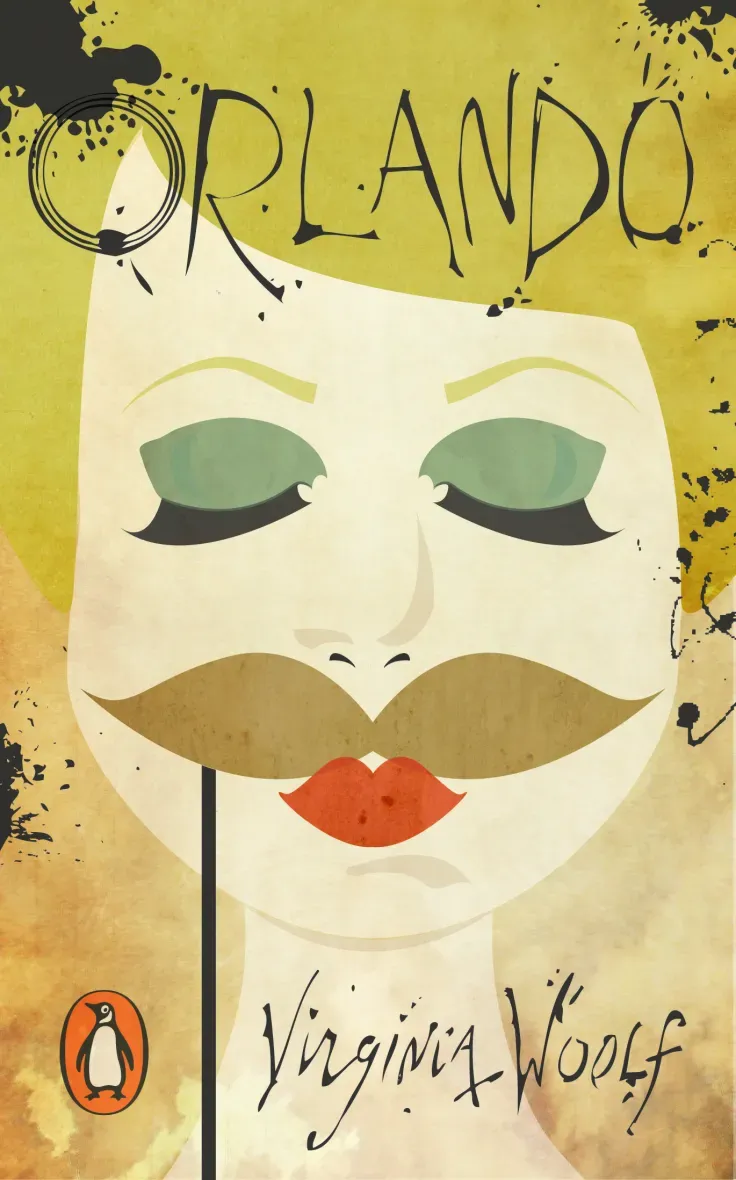
When Virginia Woolf published Orlando in 1928, inspired by her relationship with poet Vita Sackville-West, the novel garnered a reputation as the "longest and most charming love letter in literature" — playful, intimate and quietly radical in its refusal to settle into a single identity, century or way of being in the world.
Now, Sarah Ruhl’s acclaimed stage adaptation brings that same spirit of transformation to the University of Lethbridge Mainstage in a production that embraces theatricality, movement and imagination.
"This play is a poetic romp through time: playful, quick and constantly in motion," says Drama Associate Professor and Director Mia van Leeuwen.
"We're emphasizing world-building through historical costume, a set that reveals rather than conceals theatrical convention and plenty of playful, physical storytelling. But beneath the flamboyance, I’m also making space for quieter interior moments, where transformation can land with some weight."
Costumes as Storytelling
One of the most striking elements of the production is its use of historical costume as a narrative engine. Created by Fine Arts Costume Technicians Lynn Hopkins and Patricia Jonzon, with support from Drama students, the wardrobe showcases Orlando’s journey across four centuries.
"Through the character of Orlando, the show unfolds like a fashion show, with Orlando moving through time as silhouettes, fabrics and social codes shift around them," Mia says. "Each costume change marks not just a new era, but a new set of expectations placed on the body, particularly in relation to gender and power."
These transformations are brought to life by an ensemble cast that works collectively to move Orlando through time, creating a constant sense of motion and surprise.
"The students’ dedication is evident in the precision and generosity of their work; their commitment fuels the clarity and joy of the storytelling," adds Mia.
Gender as Possibility
Like Woolf’s novel, the Mainstage production approaches gender not as a problem to be solved, but as a source of joy, imagination and possibility.
“Transformation is treated with celebration rather than solemnity. Gender shifts are theatrical, playful and expansive, inviting delight as much as reflection.”
Through collaborative storytelling, the ensemble creates a world in which gender expression is supported, witnessed and amplified, offering audiences a vision of perpetual transformation that is generous and contagious.
“The show invites audiences to feel the joy of multiplicity and to recognize that joy itself as a powerful, humanizing force,” Mia explains.
Powered by Students
As with all Mainstage productions, student involvement is central to bringing Orlando to life.
Graduate student Olympia Tomasta has contributed to costume and puppet design, while undergraduate students have worked across multiple areas of production, including assisting designer Dave Smith with design elements. Graduate student Cidelle Crawford and undergraduate student Katie Stang support the production through assistant directing roles alongside a stage management team led by Drama student Finley Dupont.
“From hanging lights to building, dramaturgy, sound design, rehearsing and running the show, this production is powered by students both in front of and behind the curtain. These productions simply would not happen without their creativity, labour and commitment.”
MFA student Olympia Tomasta discusses her role in the Orlando production.
An Evolving Lineage
The novel has long been celebrated as a foundational feminist text — one that resists fixed gender roles, mocks patriarchal inheritance and insists on a woman’s freedom to move through time, history and authorship.
Mia says she has drawn inspiration from Paul B. Preciado’s documentary film Orlando: My Political Biography, which reframes Woolf’s story not as a closed narrative about one person’s transformation, but as an open invitation for trans and non-binary lives, voices and histories.
"Preciado’s work reminds us that Orlando is not simply a metaphor. It is a lens through which we can understand identity as fluid, lived, embodied and continually rewritten," says Mia. "In this reading, Orlando is not an exception. Orlando is a lineage."
That lineage, from Woolf to Ruhl to Preciado, shows how stories evolve alongside culture, with each generation finding new meaning in the same text.
"Staging this production in this present moment embraces the novel’s ongoing resonance as a text that gestures toward celebrating gender-expansive ways of being and becoming."
Orlando takes place from March 5-7 and 12-14, 2026 at 7:30 p.m. nightly in the David Spinks Theatre (W425). ULethbridge students get one free ticket with their student ID.