Good teachers can make a meaningful difference in the lives of individual students and more broadly on classrooms and communities. For Faculty of Education student Nicholas Mills, the opportunity to have an impact is one of the reasons he's excited to start his teaching career.
"I believe that a good teacher is one that is proficient in three things: subject knowledge, communication skills, and relationship building," he says.
"Teachers who have those skills are able to create an environment where students feel connected to their teacher, want to learn the subject knowledge the teacher has to share, and where the teacher can communicate it effectively to students."
Dr. Chris Mattatall, associate professor in the Faculty of Education, says he expects Mills to make an impact on his future students.
"Nicholas has demonstrated time and again thoughtful understanding and appreciation for the complexities of human experience: from his own to those who he spends time with," Mattatall says. "He is quick to listen and thoughtful with his responses. He understands what it means to show someone respect and consideration. I remember thinking once, ‘I wish I could have had Nicholas as one of my teachers growing up. He would have been the first person I would have turned to when I needed to talk to someone.’”
As Mills prepares to complete his time as an undergraduate student at the University of Lethbridge, he reflected on his journey with the Faculty of Education.
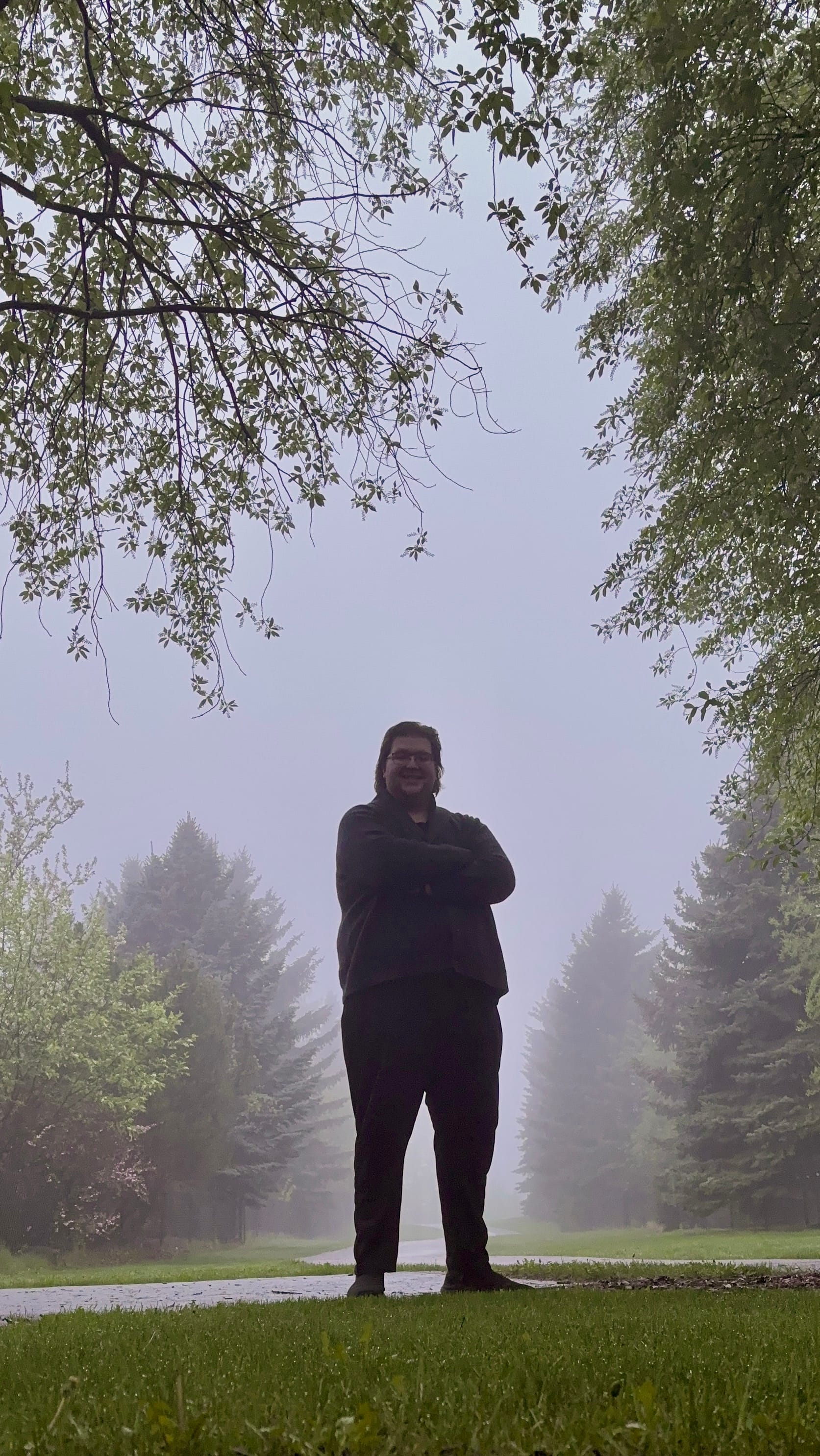
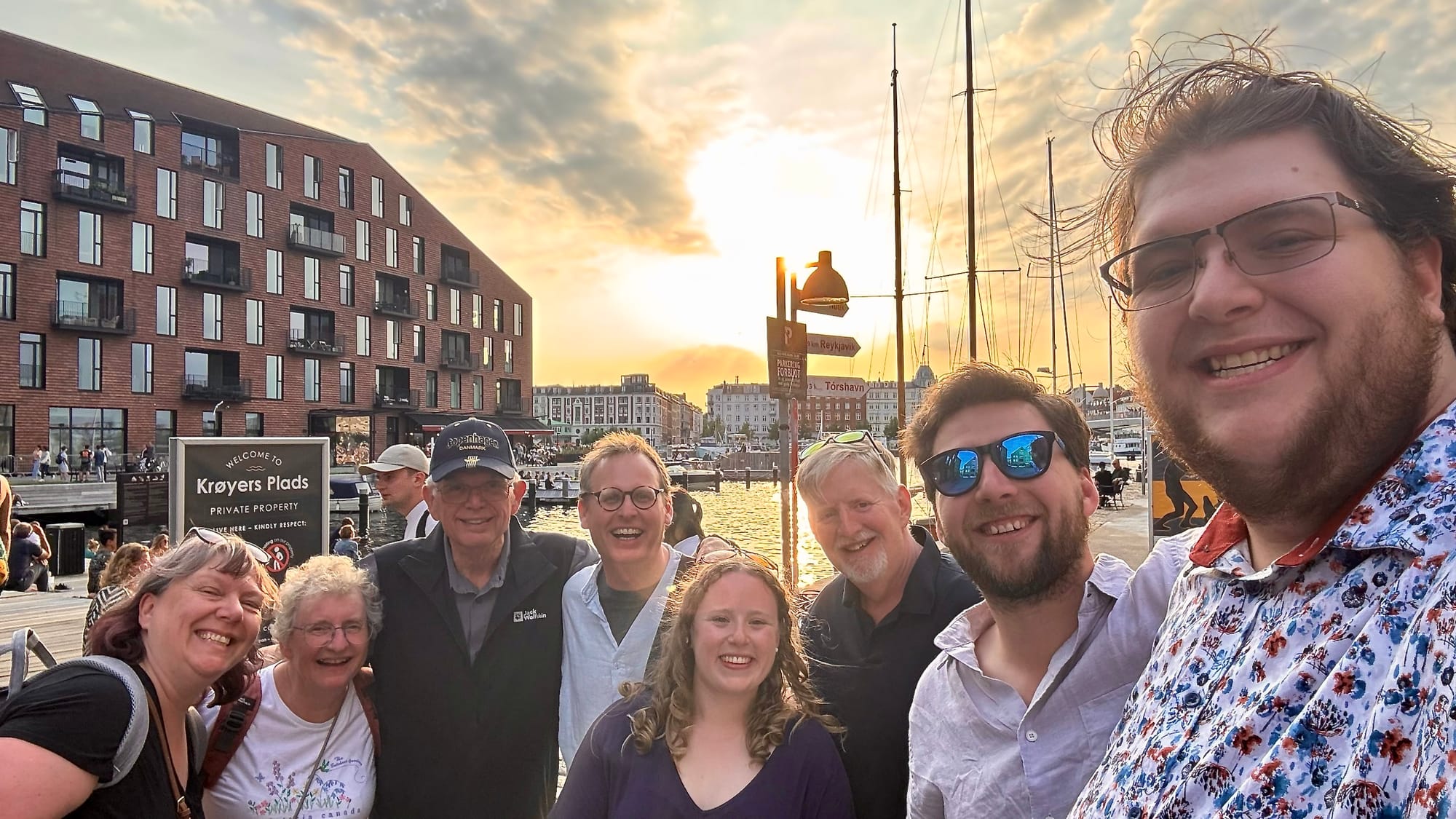
Photos provided by Nicholas Mills.
Meet Nicholas
Nicholas Mills (he/him)
Hometown: Calgary
Program: Bachelor of Education (After Degree)
Tell us three unique things about yourself.
- I have a passion for 3D printing and design that I often incorporate into my studies and my classroom.
- My commitment to life-long learning has recently led me to learn blacksmithing while on vacation.
- I have aspirations to gain experience teaching before continuing my formal learning by earning a doctorate in education.
Why education? Tell us what inspired you to become a teacher.
I first set my sights on being a teacher when I was 17. I was thinking about what I wanted for my future and ended up deciding what I didn't want. I didn't want monotony. I thought that being a teacher would give me a career where every day was an interesting new challenge. As I have matured and learned, my motivations have changed and evolved. I'm not becoming a teacher because of what I don't want anymore; instead I am becoming a teacher because I eventually figured out things that I do want. I want to be a driver for change. To me, one of the most impactful ways to better a society is to raise the level of education and critical thinking of the people in that society. Being a teacher directly allows me to do that. I also want to enjoy my work; and I have found that I really enjoy being a teacher. It sounds a little obvious to say that I'd like to enjoy what I do, but it is something I don't take for granted.
What have you learned about teaching that's surprised you or excited you through your journey in the Faculty of Education?
During my time in the Faculty of Education I have become particularly excited about and interested in assessment practices. During my final practicum, I had the opportunity to develop and try various formative assessments that were intended to push students towards higher levels of thinking on Bloom's taxonomy. So many of the tests in school, especially in the sciences, reward students for their ability to remember facts and information. It is more rare that tests aim to push students to analyze, evaluate, or create information in order to earn their grade. That is something I tried to change when designing my assessments. I very much look forward to continuing to explore this idea as I go forward in my career.
Tell us about any standout practicum/learning experiences in the field and how they have impacted you.
It's difficult to choose just one! A moment that has been on my mind lately is one that I did not appreciate fully while it was happening. I was at school early one morning when one of my students came in and happily sat in her desk. This student was ordinarily quite lethargic and reserved, especially during first-period classes, however that day was different. Without having to even ask her what was making her so happy that morning, she excitedly came over and showed me her brand-new driver's license. She told me how happy she was that she could finally drive on her own and she shared a bunch of things that she wanted to do with her newfound freedom. In the moment I responded by matching her enthusiasm and congratulating her. I didn't think anything more about it until a couple weeks after I had completed my practicum. What I failed to recognize in the moment was what her willingness to share her excitement with me actually meant. Looking back on it, I realize that interaction means I had developed a trusting and positive enough relationship with my student that she felt my response to her achievement was going to make her feel good in some way.
During my education degree it has been repeatedly emphasized that building relationships with students is at the heart of being a teacher. When I think about that moment with my student, I feel as though I have proved to myself that I am capable of being the type of teacher I have aspired to be for so long. It's quite a validating feeling.
What piece of advice would you give to future Faculty of Education students?
I have found that success within the Faculty of Education is measured very differently than any other schooling I've had before. In education, there has been little to no requirement to find the "correct" answer. Success in education is not measured by an accurate calculation or a multiple choice test. Based on my own experience, success in education is measured by effort, honest introspection, passion and engagement.
If there is a rubric for an assignment, don't try to meet all the expectations; put in the extra effort to beat them. If there is an assignment about who you are as a person, don't shy away. Be honest and open. Find ways of making assignments something that you are excited to do. Incorporate your interests and passions into your work. Lastly, speak up in class. Ask questions, express your thoughts, and take chances. You will learn far more by getting actively involved than you will by passively observing.
Update your contact information with Alumni Relations.
Find us on Facebook, Instagram or LinkedIn
Read more about your fellow alumni.