When the first group of students enrolled in the new Therapeutic Recreation (TR) program at the University of Lethbridge in 2015, they numbered 20. Fast forward to 2025, enrolment has exploded with 194 students studying online and 65 studying on campus, and 309 graduates.
Hosted by Dr. Sienna Caspar, the program recently celebrated its 10th anniversary with a virtual celebration for students, alumni and faculty. They were joined by Drs. Dayna Daniels, Professor Emerita of Kinesiology and Physical Education, and Chris Hosgood, former Dean of the Faculty of Health Sciences, both of whom were key to establishing the program.
“It took three-and-a-half years of blood, sweat and tears to get the program running,” says Hosgood. “To see now where you have all built the program, it makes me feel more than good because so many people put so much work into developing it and getting it through. This wasn’t just a new major; this was a new degree, and creating a new degree in the province is a far higher hurdle to cross than adding a major.”
To get the program established, Daniels sought guidance from Dr. Jerome (Jerry) Singleton, who taught therapeutic recreation at Dalhousie University. Then Devan McNeill, TR Program Coordinator, joined the team in 2014, soon followed by Dr. Dr. Sienna Caspar, who joined in 2015.
The program quickly became competitive, going from 20 students to 59 in one year. The pandemic years resulted in enrolment staying relatively flat, but it shot up to more than 100 after restrictions were lifted. Demand for the program continued to grow.
“We were turning away far, far too many outstanding applicants, which was one of the reasons why we put in the application to double our online degree spaces,” says Caspar.
They were adamant that class sizes stay small, something University administration also supported. Increased enrolment meant more instructors were needed and Zac Crouse, Aimee Douziech, Katelyn Scott and Tiffany Morin joined the team. In 2023, online enrolment doubled to 64.
“One of the biggest things that makes this program stand out is all that’s been accomplished with such a small team,” says Caspar. “One of the reasons for that is that the culture within our team is just so positive. We put in effort to ensure that our culture is really supportive, we figure out how to say yes to one another, and we find ways to support each other and move forward together, which makes us very agile.”
Building a team isn’t easy, even when people are in the same building, let alone when they live on opposite sides of the country. With Caspar residing on the West Coast and Crouse in Nova Scotia, the team relies on monthly virtual program meetings and monthly socials.
The TR program is a post-diploma or after-degree program, so most students have some level of experience in TR when they enter the program. The degree prepares students for the exam that entitles them to become Certified Therapeutic Recreation Specialists.
One such student was Amanda Ervin (BTR ’20, MSc ’23). Now the Executive Director of the Alberta Therapeutic Recreation Association and a PhD student, Ervin had worked in TR for nearly a decade before entering the program. She was drawn to the field as a way to help people improve their quality of life in ways that are based on evidence and also deeply human.
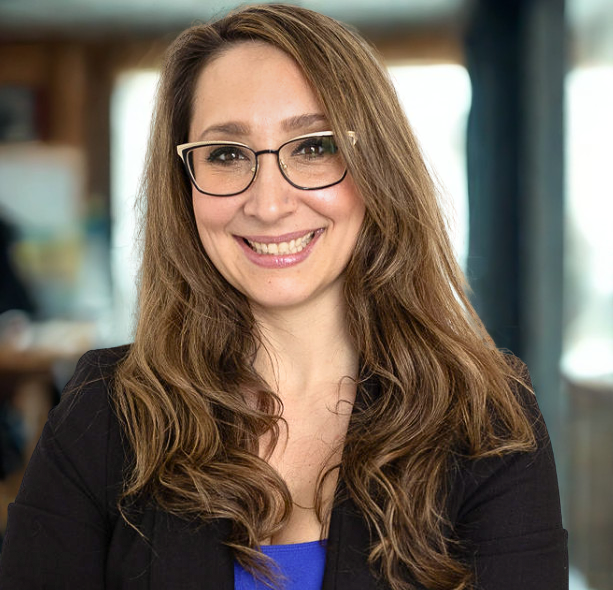
“My experience as a TR student was incredibly rewarding,” she says. “It challenged me to think critically about person-centred care, inclusion and the broader social systems that shape health and well-being.”
Her PhD research focuses on traditional Indigenous games, cultural survival and therapeutic recreation to advance more culturally responsive and decolonial approaches to care.
Students in the program consistently say their relationship with their instructors is the best thing about the program, Caspar says.
Jayleen Desaunoy (BTR ’22) took the TR program because she enjoyed working with people. However, studying during the pandemic meant limited face-to-face interactions.

“Being someone who thoroughly enjoys connecting with people, it was a unique and fun challenge,” she says. “The instructors/professors were incredibly supportive, and I am grateful for their flexibility in providing additional online classes.”
After completing the program, Desaunoy moved back to her hometown of Crowsnest Pass when a position as a recreation therapist opened there. Working with seniors, she soon realized there was a need for more support. She, in partnership with Josh Hellawell, established Cartwright Cares. The company provides services like lawn care, snow removal, housecleaning, meal prep, friendly visits, and accompaniment to appointments or shopping. In addition, the company provides recreation therapy in the community and recently launched an after-school program for children with disabilities.
While students say it’s the instructors and the relationships they have with instructors that are the best things about the program, Caspar says instructors also benefit.
“We have students who inspire and motivate us to be our best,” she says.