Three That Matter is an annual Bookstore initiative designed to celebrate reading as a shared, campus-wide practice. Each cycle, members of our community are invited to name three books that have shaped the way they think, work or see the world. These selections form a growing, evolving portrait of the ideas, stories and voices that circulate through our institution.
Curated by the Bookstore, this project is intended to strengthen our sense of community by making visible the many different paths that bring us together as readers. When students encounter the books that have mattered to people they see and learn from every day, it creates new points of connection, curiosity and conversation across disciplines and roles.
Throughout the year, featured titles will be highlighted and made available through the Bookstore at a 20 per cent discount, inviting everyone to take part in this shared act of discovery. Three That Matter is not just a list of books, but an ongoing invitation to reflect on what we read, why it matters and how those stories help shape who we are together.
Dr. Michelle Helstein's Three That Matter
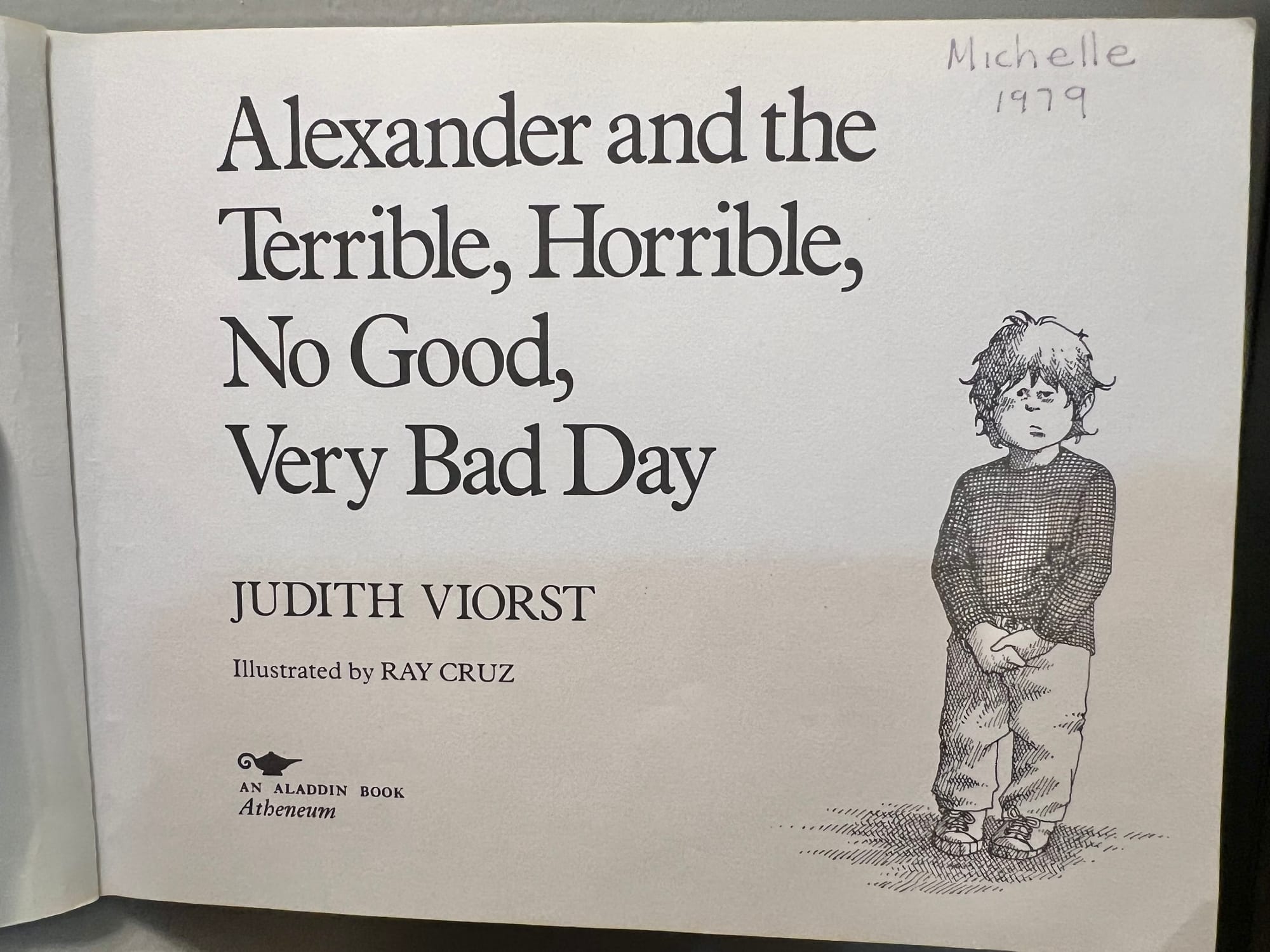
Alexander and the Terrible, Horrible, No Good, Very Bad Day by Judith Viorst
Why it matters
This was my first book. To be clear, there will have been many previous books, and even some that were “mine,” but this is the first one I remember as belonging to me. The first book I remember taking care of, reading over and over again and having on my shelf. It started my collection and my connection to books and to reading. I still have that same copy on my bookshelf, and “Michelle 1979” is printed neatly on the inside front cover. While I know the story mostly by heart, I still flip through the book occasionally, and on a really challenging day, I might even comfort myself by muttering, “Some days are like that, even in Australia.”
To Kill a Mockingbird by Harper Lee
Why it matters
I read this early in junior high. It wasn’t the first book to make me cry (Charlotte’s Web was, I think), but it did make me cry, and it really rattled me. I can still remember the deep frustration I felt with the injustices narrated by Scout in this book, and the growing sense of needing to learn and understand the world outside my own experiences of it. This book led me to reading a lot of non-fiction about history — its people, places and social context. For me in those days, that was mostly grabbing a volume from the World Book Encyclopedia, reading one entry, which would lead me to another entry in a different volume, and then another and another. I loved following those threads of curiosity and learning.
Questions of Cultural Identity edited by Stuart Hall & Paul du Gay
Why it matters
I read this in graduate school. It was not the best, most important, nor most helpful book I read in that time period (far from it, actually), but it stands out for me all these years later. My research interests have always been grounded in the interconnections of knowledge, power and identity. I was reading so much and was interested and excited about so many ideas, but like many graduate students, I was struggling to find my focus. Then I read the introduction to this book, written by Stuart Hall, and titled Who Needs Identity? It put into conversation a number of the theorists I was reading (Althusser, Butler, Derrida, Foucault, Hall, Lacan) and shifted my thinking from questions of identity to questions of identification. It was just the right book at the right time, and that seemingly subtle shift in thinking was the start of finishing my dissertation.
Closing thoughts
The interesting thing to me about my list is that, as I thought about the Three that Matter, I wasn’t drawn at all to the “best” or “most important” books I’ve read. My mind went to the books embedded in my life’s moments and memories — books that defined, challenged, inspired and enabled me at different points in my life. I love the way books are entangled and important in my life story, and I hope that is true for you, too!