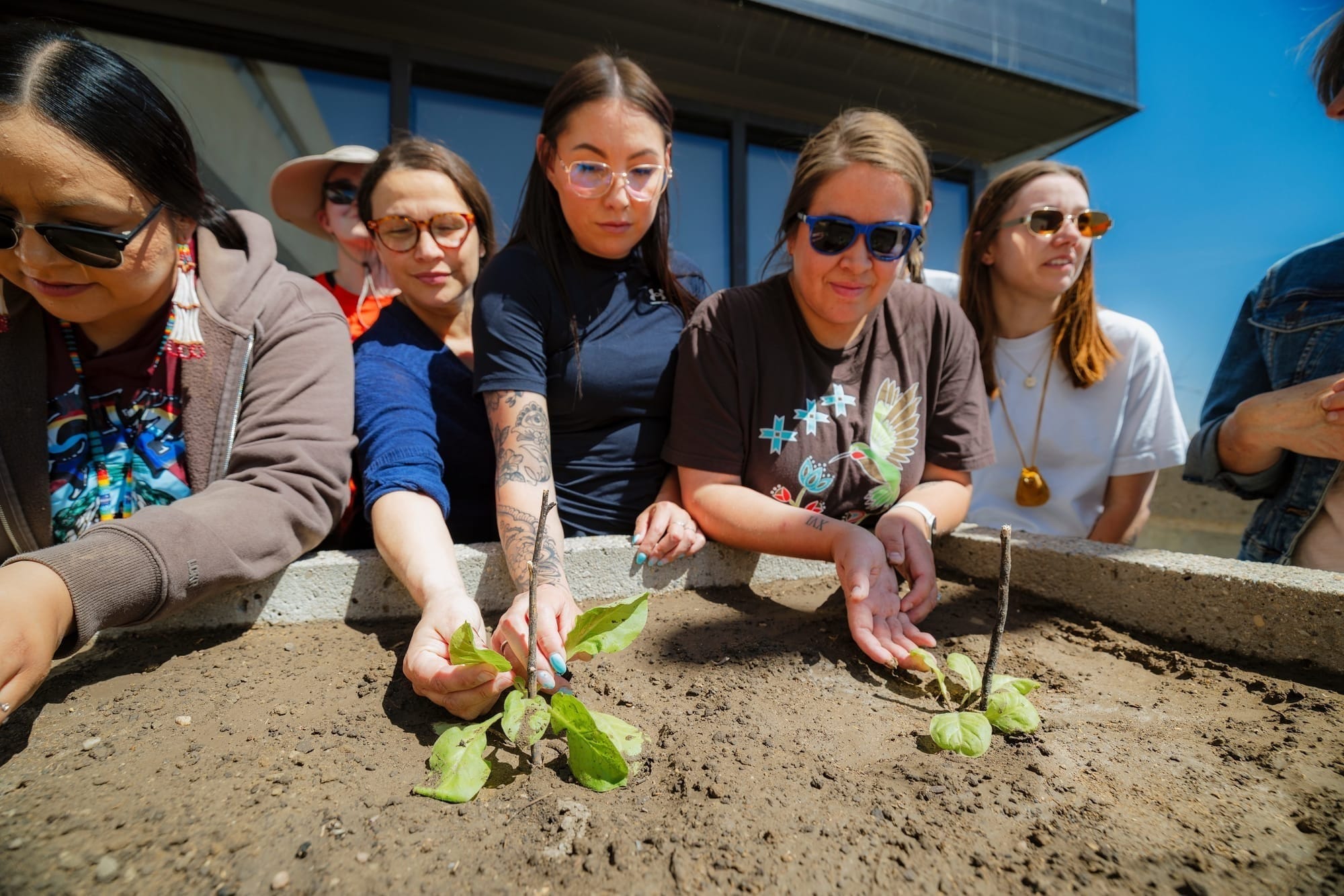
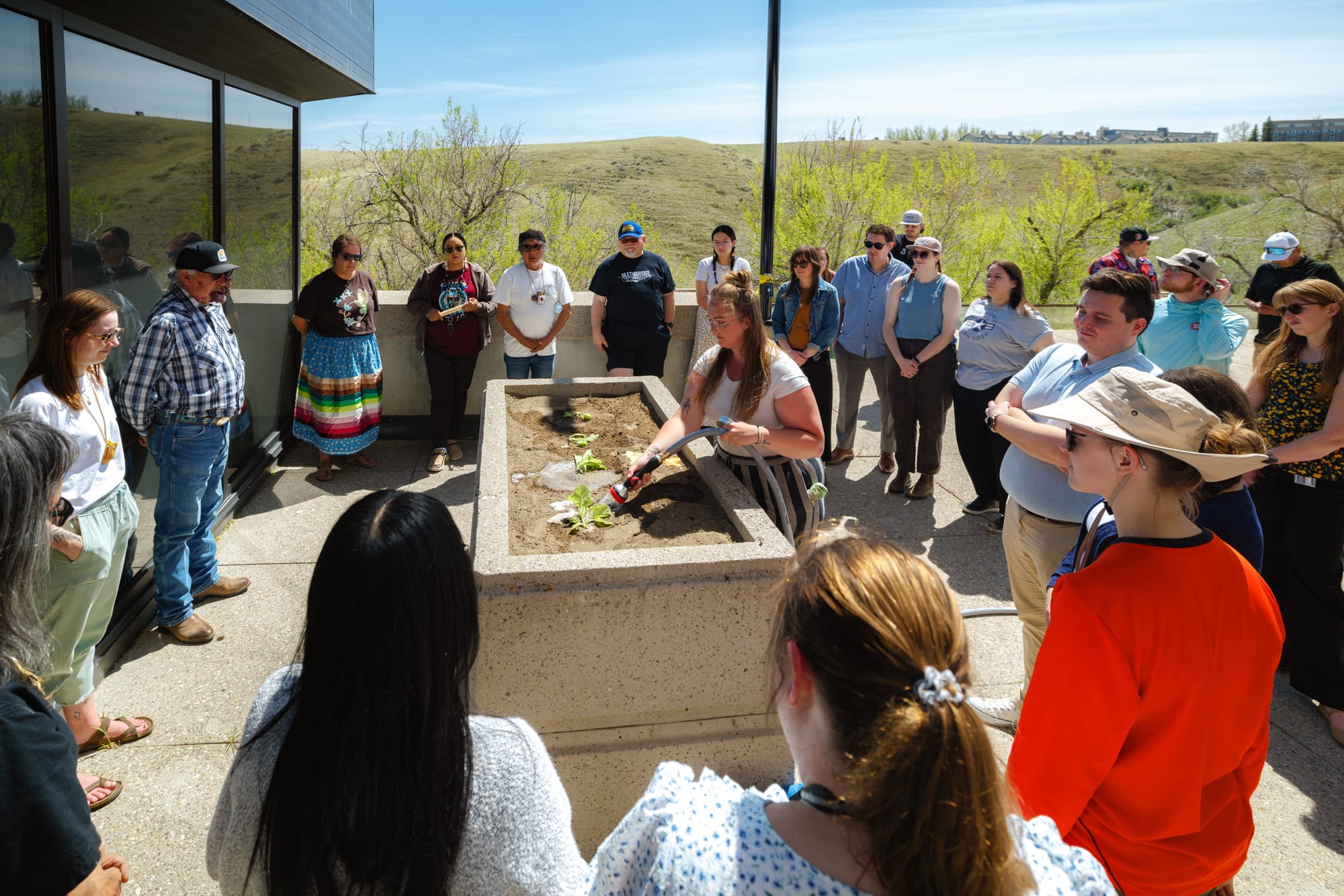
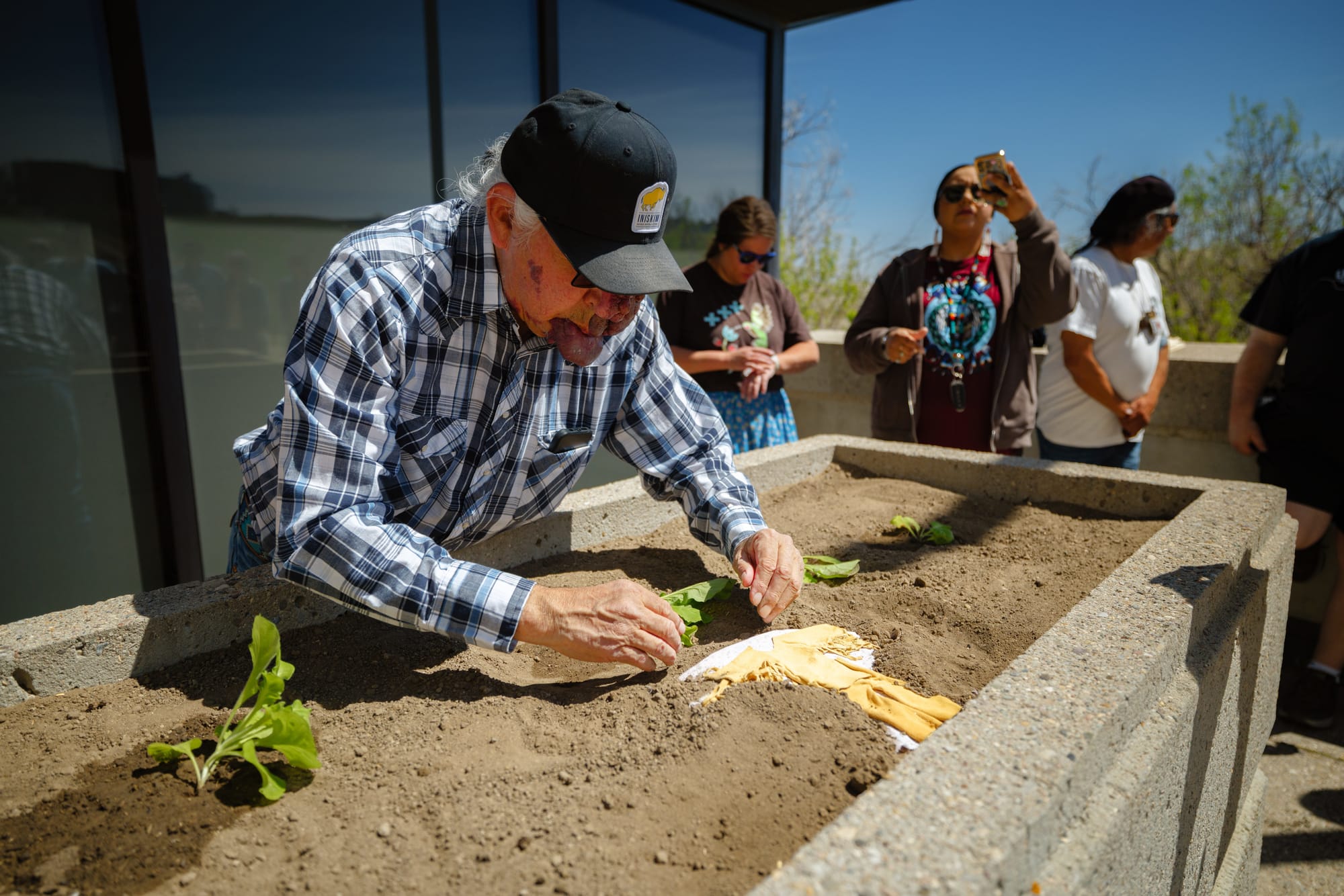
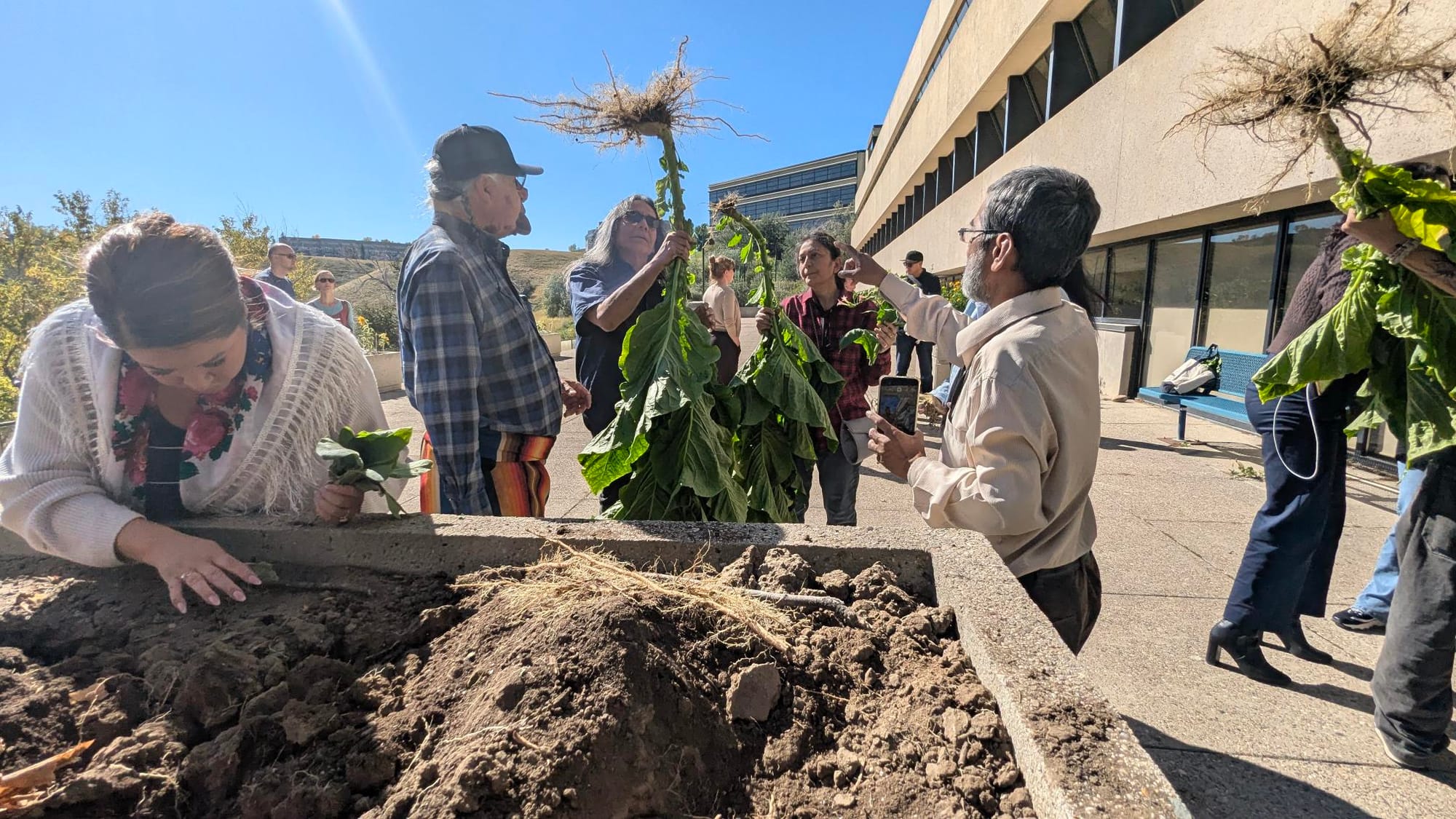
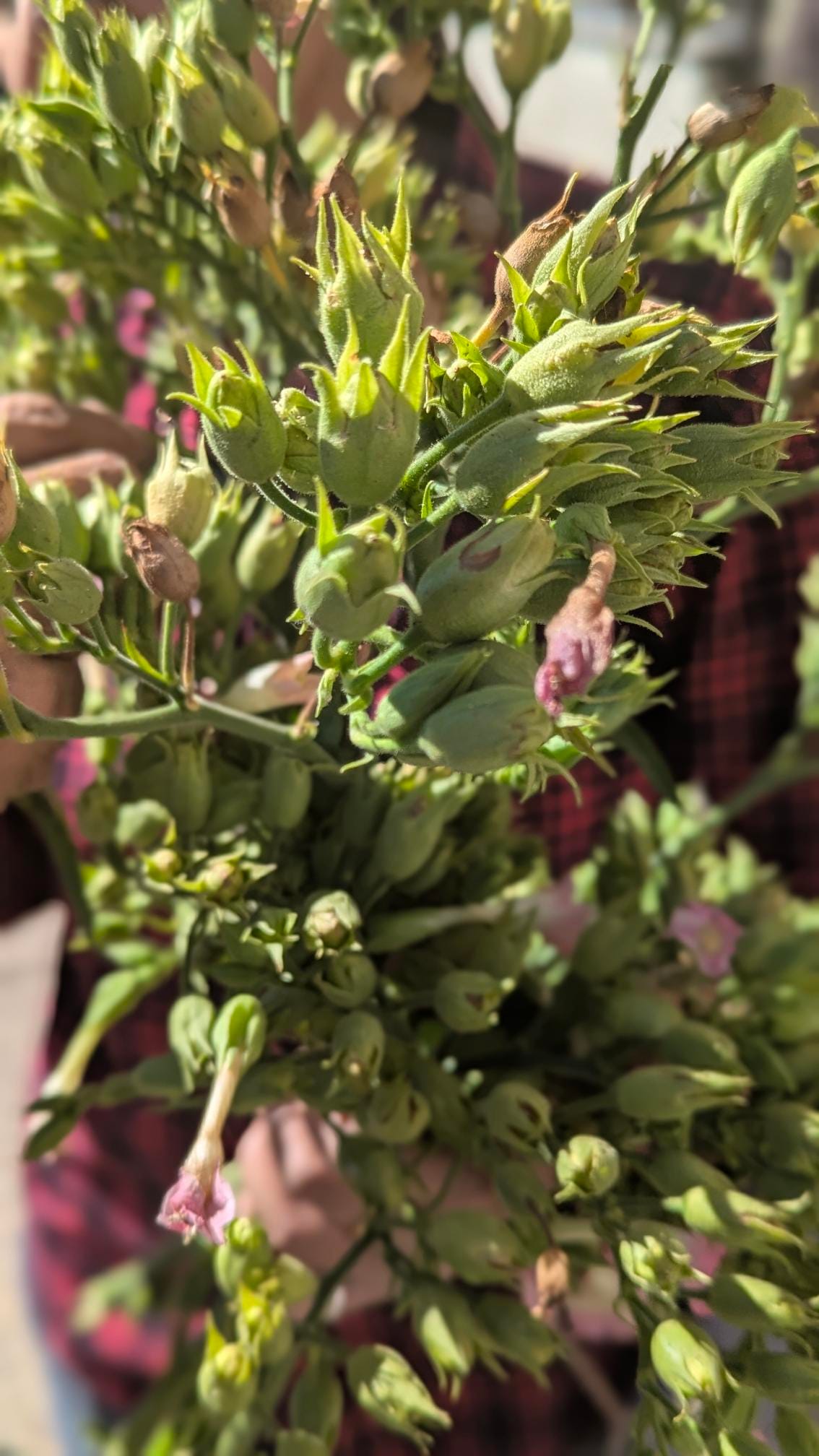
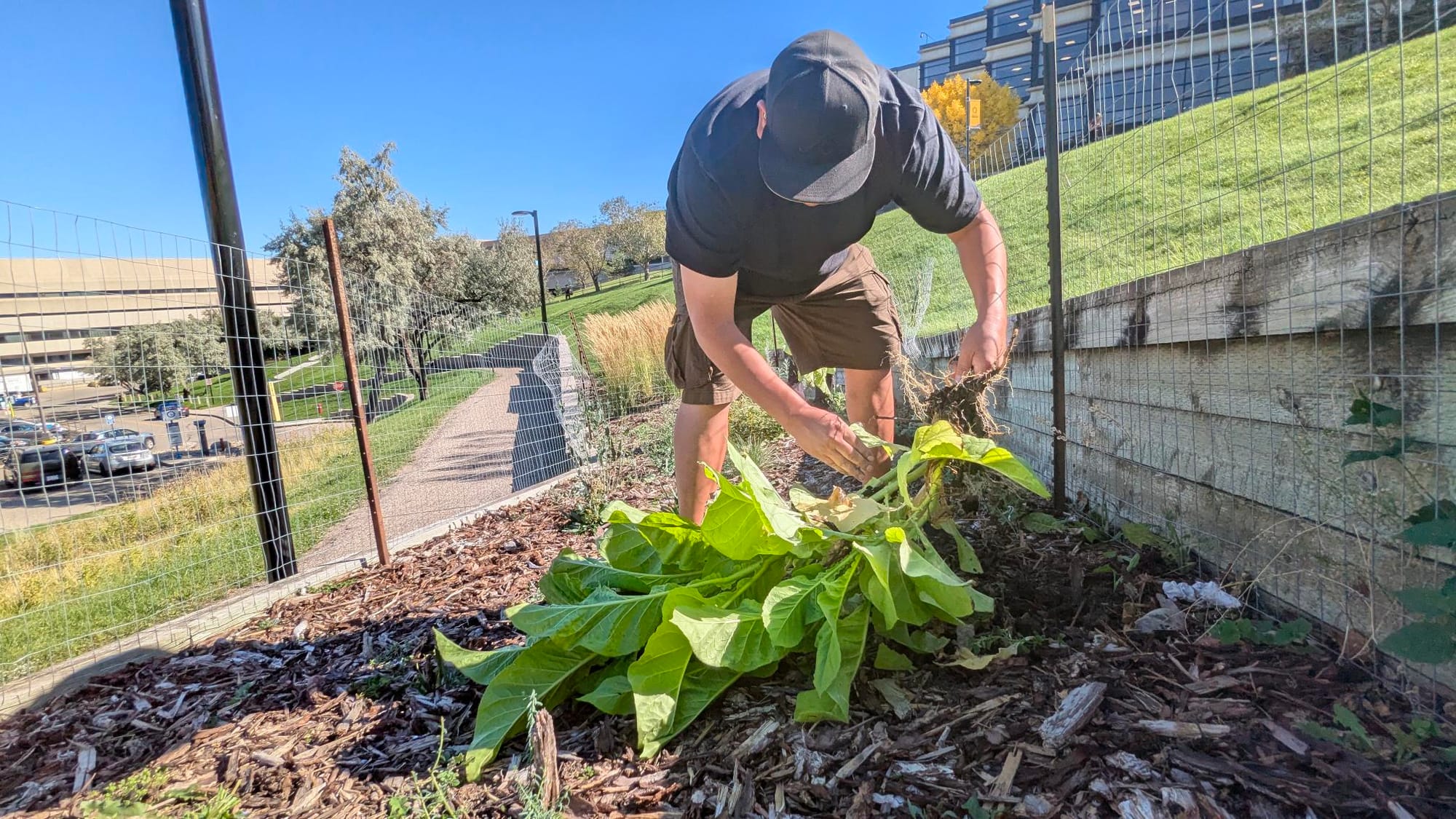
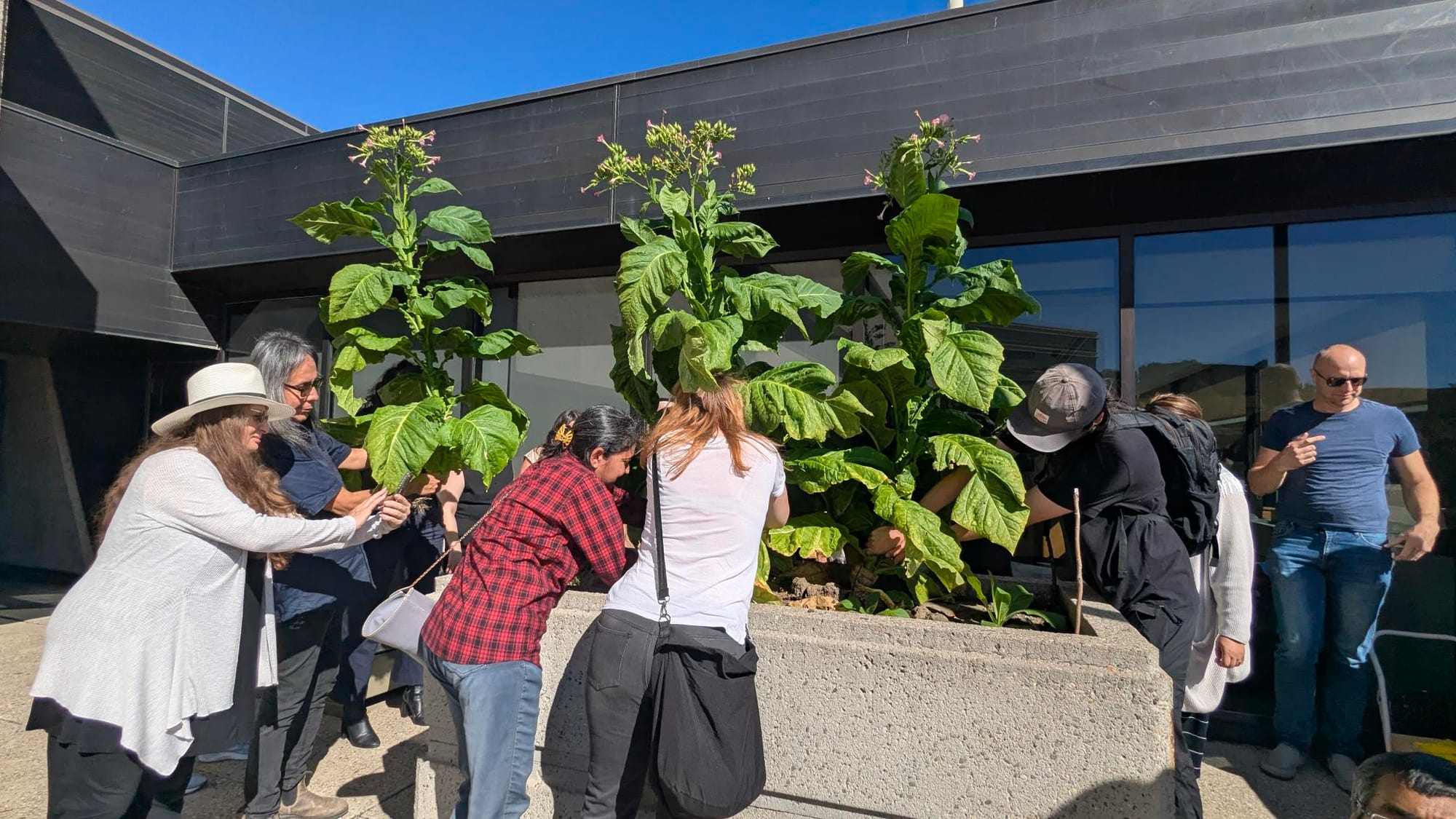
On Sept. 21, ULethbridge faculty, staff, students and community partners came together to harvest tobacco plants that were originally planted in the Devonian Gardens and on the University Hall South Patio as part of the Roots of Growth project in a ceremony with Elder Ninna Piiksii (Chief Bird) Dr. Mike Bruised Head ((BASc (BA) '80, BEd '98, PhD '22).
The harvesting of the tobacco plants was a full circle moment for the Roots of Growth project which was first established in 2019. It had roots in the Indigenous Student Success Cohort (ISSC) and began as a student capstone project under the Iniskim Campus Ecology Cohort. To commemorate the lives lost and affected by residential schools in southern Alberta, two trees and two bushes were originally planted on campus as an act of reconciliation to address Call to Action #74 out of the Truth and Reconciliation Commission’s 94 Calls to Action.
Call to Action #74 calls upon the federal government to work with the churches and Aboriginal community leaders to inform the families of children who died at residential schools of the child's burial location, and to respond to families' wishes for appropriate commemoration ceremonies and markers, and reburial in home communities where requested.
The purpose of Roots of Growth is to advance reconciliation on Blackfoot territory through respectful collaborations and to support long-term campus sustainability while connecting people to the land through planting, land-based learning and shared experiences.
Memorial gardens represent reconciliation in action
Naatoyi Sipistakii (Holy Owl Woman) Mai Eagle Speaker is a third-year Indigenous Health student who created her own position as the Roots of Growth Coordinator. Last year, she was doing an applied studies placement with Lethbridge Public Interest Research Group (LPIRG) through the Sustainability Cohort.
While working on the campus sustainability project, she explored setting up a traditional medicine garden on campus. Once Eagle Speaker learned of the original project, she engaged with the community and decided to champion the revitalization of the Roots of Growth initiative.
“I moved from BC to southern Alberta to connect to the land and my Blackfoot culture, and through revitalizing the Roots of Growth I was able to not only witness reconciliation in action but I was able to immerse myself into learning about my people and how they care for the land for time immemorial. These memorial gardens are for everybody,” she says.
“Seeing people from different Faculties and backgrounds coming together to care for the land, is really heartwarming to see.”
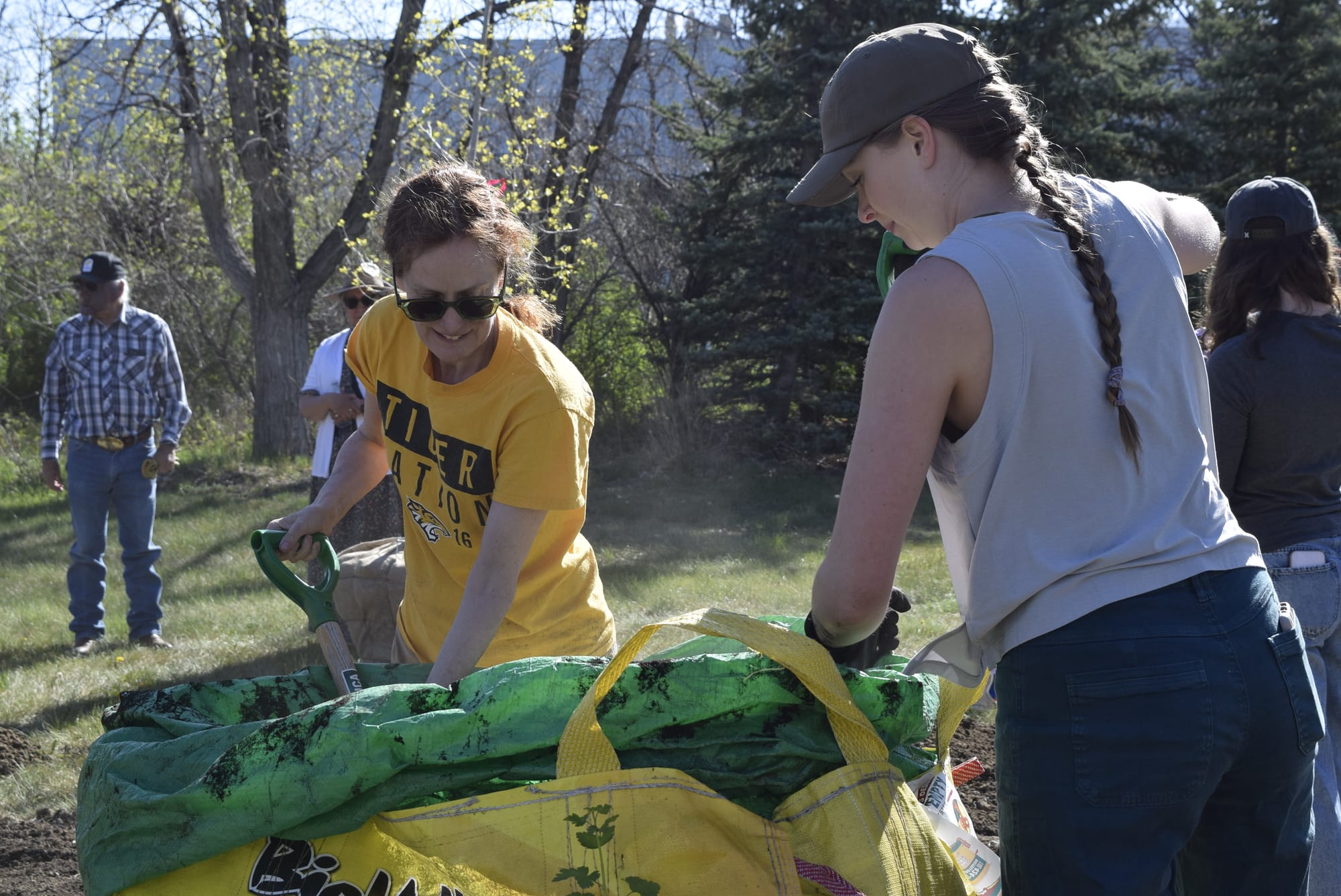
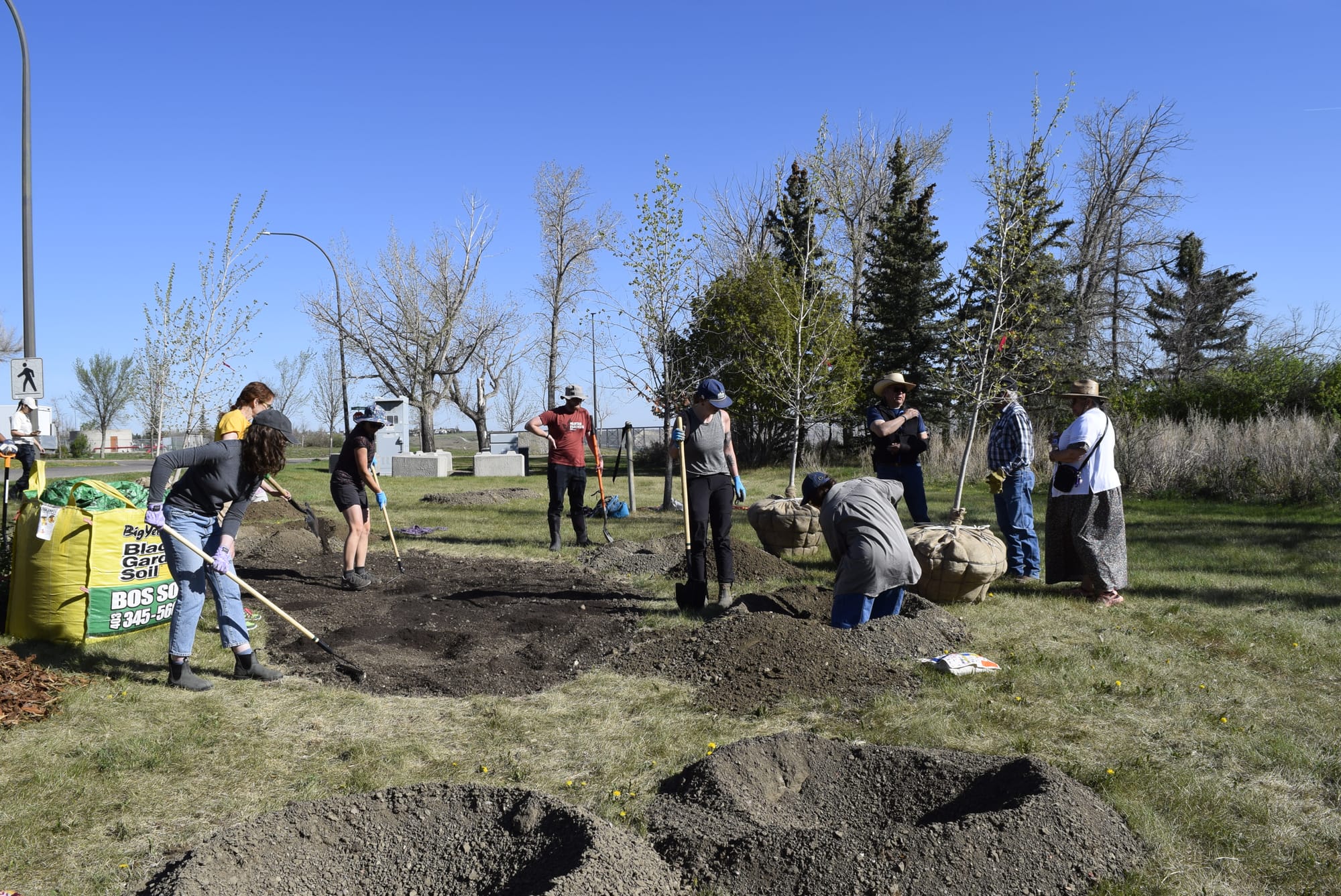
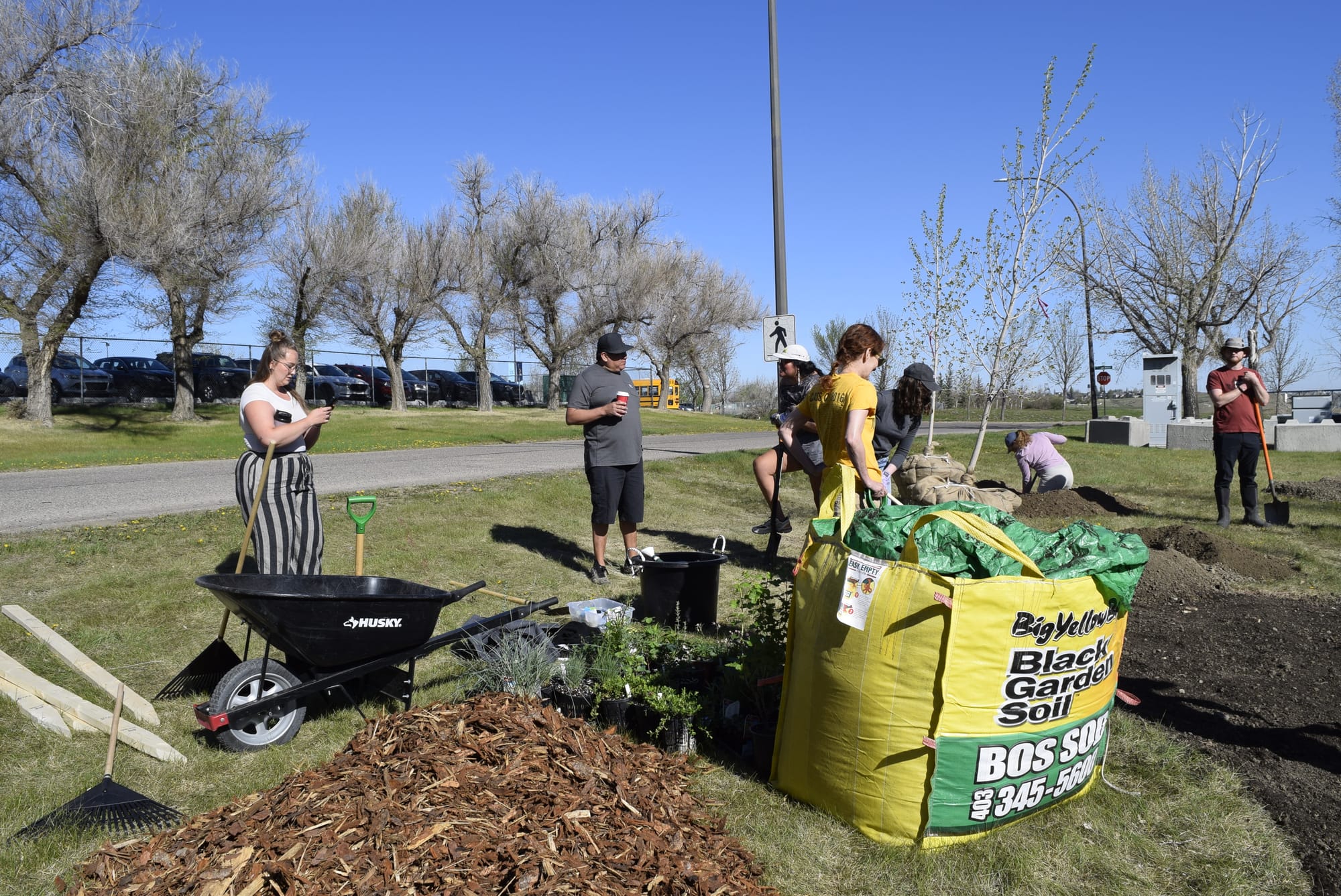
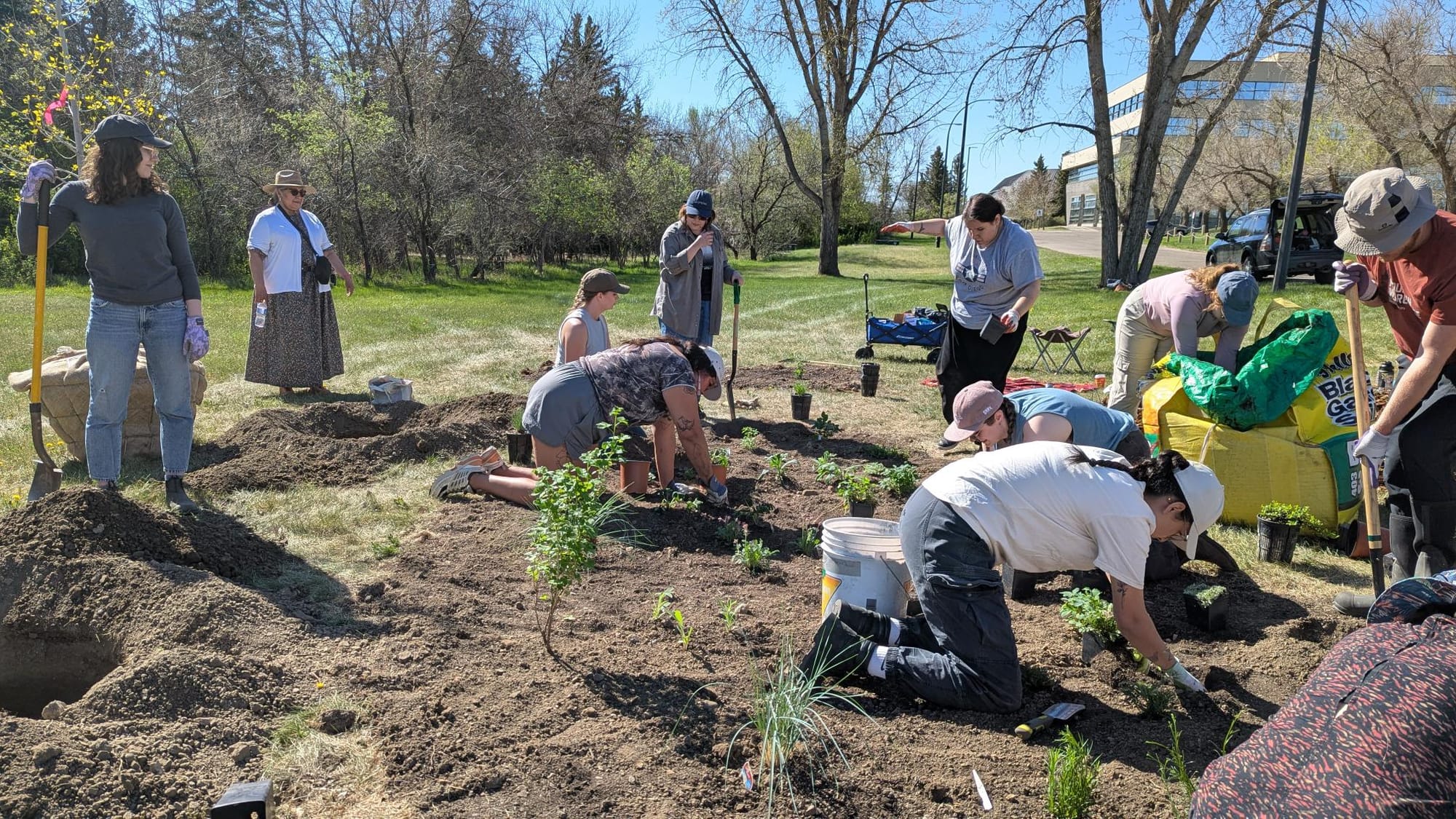
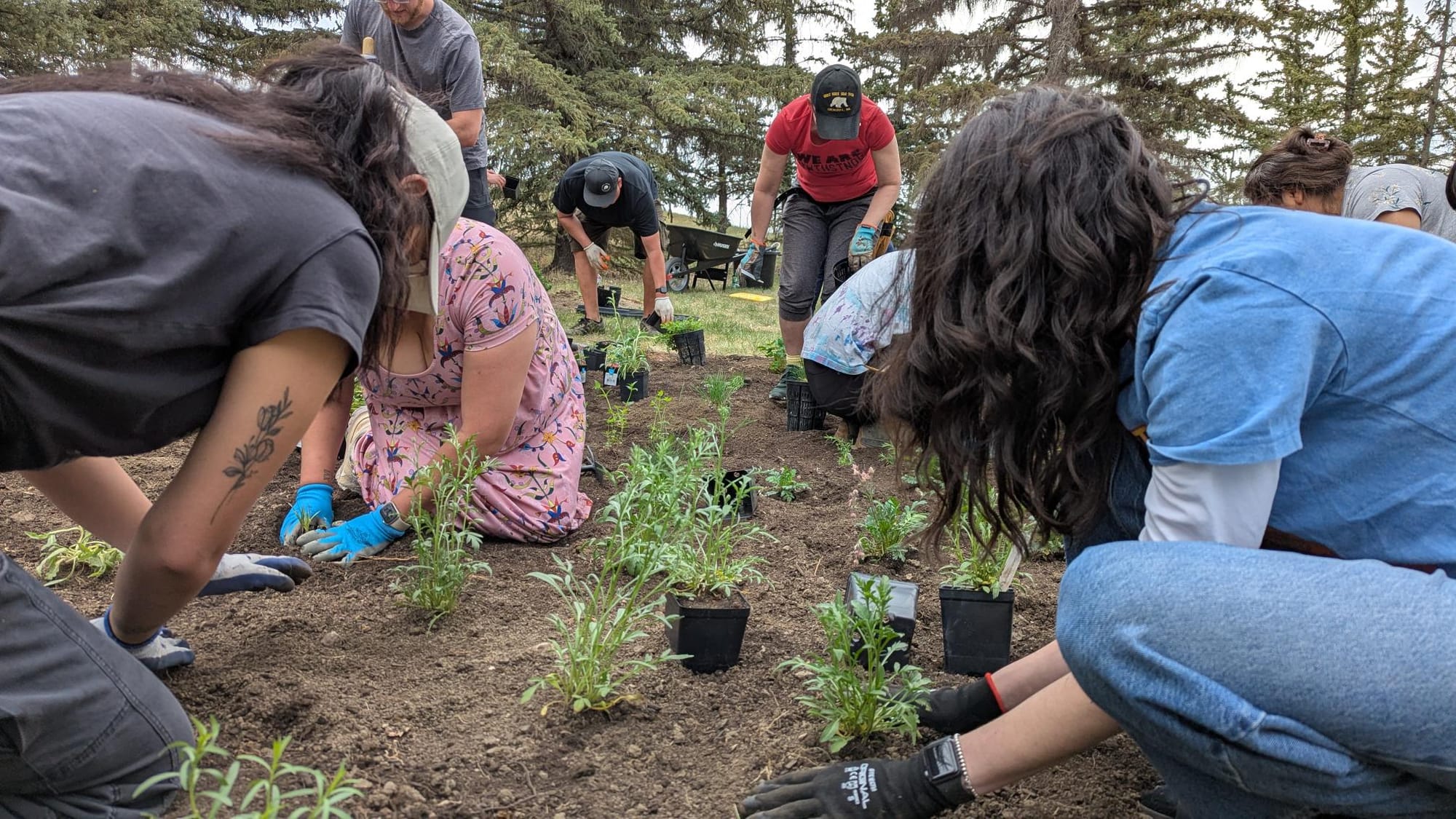
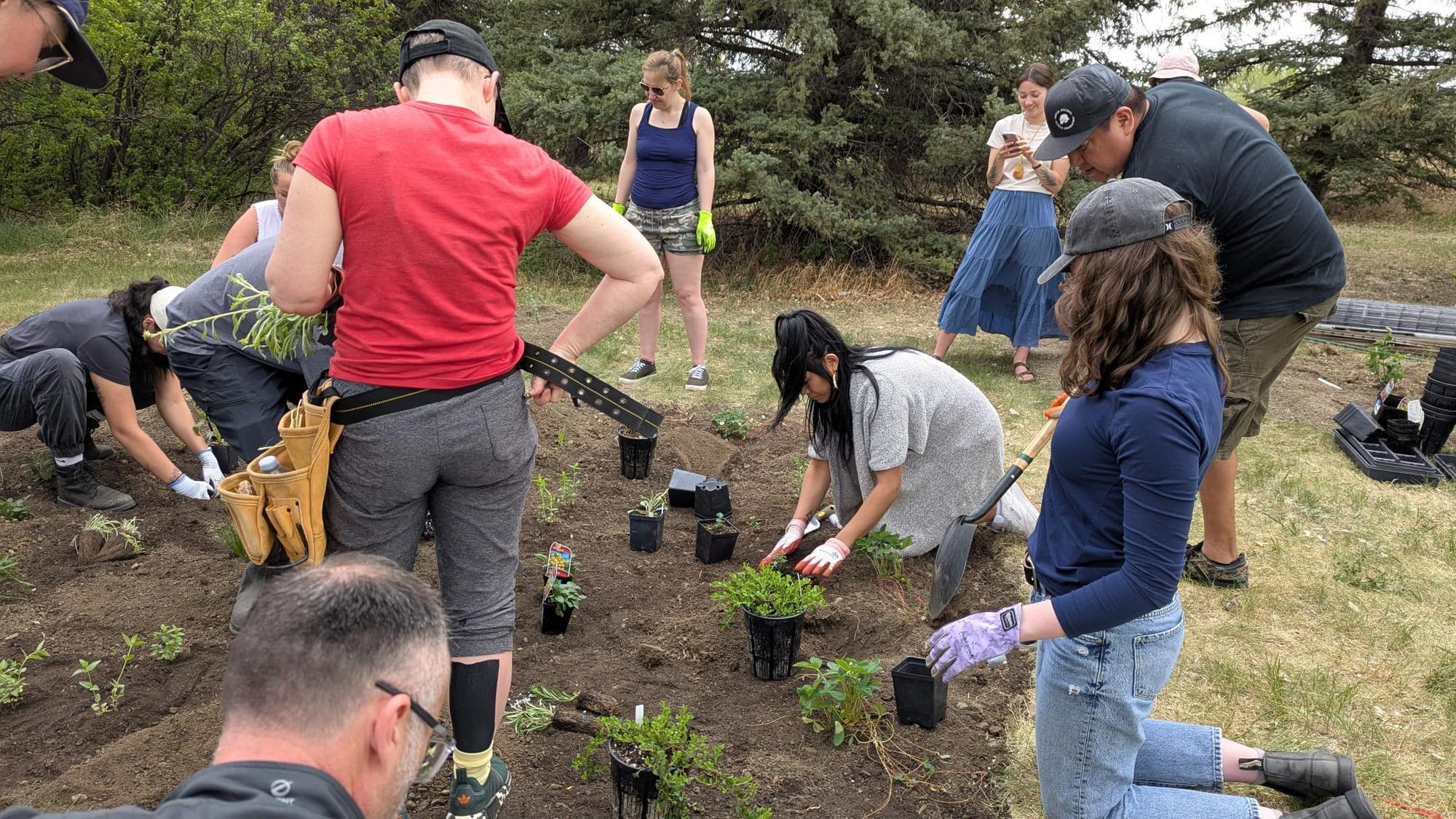
In the spring of 2026, Roots of Growth was relaunched when the Sustainability Cohort and and volunteers collectively planted over 300 new Indigenous, drought-resistant, edible and medicinal plants on campus. Across four garden sites, everything from crocuses, lupins, prairie sage, saskatoons, poplar trees and more were planted. The tobacco plants were provided by Naapi’s Garden which started as seedlings grown in lab by Dr. Annie Ray and Devasis Dasgupta in their sustainable plant propagation start-up company Anandi Botanicals Inc. The plant funding came from Environment Lethbridge, exclusively through their Water Wise program; the plant list and garden layouts were developed in collaboration with students and community.
Partnerships and work-integrated learning at heart of project
Both the planting and harvest brought together ULethbridge students, staff, faculty and community partners. Roots of Growth partners include LPIRG, Environment Lethbridge, Naapi’s Garden, Youth Eco Stewards, Anandi Botanicals and Kainai Ecosystem Protection Association (KEPA), Mountain Rider Environmental, and the list continues to grow. ULethbridge Facilities management also helped in site planning, prepping, protection and maintenance. Students across different Faculties are also contributing with everything from stakeholder surveys to environmental monitoring, grant writing and website and app development.
Several students involved in Roots of Growth completed both co-operative education work terms and applied study courses through the project, creating meaningful connections between their academic studies, personal growth and professional development. Through these work-integrated learning courses, students contributed to community-engaged initiatives grounded in relationship building, reconciliation, land-based learning, and Indigenous ways of knowing, being and learning.
Aisstoyiimsstaa (Makes Cold Weather) Karl Crow is a member of the Piikani Nation. He is completing his Bachelor of Health Sciences degree in Addictions and Mental Health Counselling. He is the Environmental Monitor for the Roots of Growth project and is also the Natural Resource Technician and Engagement Specialist for Mountain Rider Environmental (MRE). Both Crow and Nathan Provost of Mountain Rider Environmental established a monitoring project for Roots of Growth where data is collected from the planting sites throughout the seasons.
Provost is also a member of the Piikani Nation and owns and operates Mountain Rider Environmental (MRE) as Principal Consultant. Provost was one of four founding members of Roots of Growth and is currently enrolled in the ULethbridge Master of Science program in Environmental Science.
The ongoing monitoring project will continue as the Roots of Growth project grows and this will allow students to fill this ongoing position and to gain real world environmental work experience. This position will also expose the students to various workshops that braid Western education and Niitsitapi ways of knowing regarding environmental issues.
Both Provost and Crow acknowledge the new position was made possible by supports from Zuback and LPIRG and Sheridan Macaulay, Indigenous Work Integrated Learning (WIL) Instructor and the Niitsitapi Circle of Excellence in WIL.
"Roots of Growth demonstrates the incredible impact students can have when we create structures, pathways and programs for them to lead, learn and build relationships through community-engaged education," says Macaulay.
"The gardens are a visible reminder of what is possible when students, community and Indigenous knowledge come together. The impact of these students extends far beyond a single project, course, or season. Roots of Growth shows that reconciliation is not a destination, but an ongoing practice of learning, listening, reflecting and taking action."
Student project shows reconciliation is about collective action
Shelby Zuback, executive director of LPIRG says that it’s significant the students chose to create something living and evolving, rooted in Indigenous pedagogies, environmental stewardship, education and community accountability. The gardens are a living reminder that reconciliation is more than words but collective action.
“Roots of Growth was originally imagined, organized and carried forward by students and continues to be carried forward by students who recognized that reconciliation cannot exist only in mission statements, plaques, or land acknowledgements but through action and shared responsibility,” says Zuback.
“Reconciliation, like all meaningful growth, depends on generations learning from one another — on wisdom being shared, questions being welcomed, and young people learning and being trusted to carry teachings forward. Spaces like Roots of Growth matter because they create opportunities for those relationships to deepen and continue.”
Gardens offer land-based learning and space to reflect on impact of residential schools
Eagle Speaker says her experience with Roots of Growth has been invaluable. Over the summer, she was able to foster connections with Oldman Watershed Council and KEPA. Along with Crow, Eagle Speaker visited the Kanai Healing Lodge and spent the day with residents and Knowledge Keeper Siipyapaansskyaakii (Singing in the Night Women) Stephanie Calfrobe and learned about the significance of plants to harvest them sustainably.
“Part of my co-op is learning traditional knowledge around our medicines, land-based learning and the Campus Sustainability Project and the [Roots of Growth] gave me the opportunity to get the meaningful hands-on experience needed to inform and shape the project,” she adds.
She says that the plan is to have land-based learning workshops so that others can learn about the importance of traditional ecological knowledge and how they too can become stewards of the land.
“My vision for Roots of Growth is that it continues to expand through community and student-led leadership so that the program has sustainability built into it and people understand the meaning of the gardens so they can be inspired to care for these spaces and support the continuity of them and the program.”
Eagle Speaker says that she hopes people visit the Roots of Growth gardens and take some time to reflect on residential schools and the impact they had on Indigenous children across Canada.
“My grandparents and mother were residential school survivors. My grandmother’s little brother died in residential school from lack of care and tuberculosis. Due to segregation of boys and girls in the residential school that my grandmother attended with her brother, she never got to see or comfort her sick brother and was only told later that he had died,” she says.
“Growing up with these stories helped me understand the trauma my family had endured and the intergenerational trauma that I carried. Through spaces like Roots of Growth, we can come together in honouring the survivors and the children who never returned home by sharing the truth of what happened to them, so that individuals, families and generations can heal, and so atrocities like this never happen again.”
For students or community members who want to get involved with Roots of Growth, please contact Sheridan Macaulay.