On March 12, 2026, the University of Lethbridge School of Graduate Studies hosted the 13th annual Three Minute Thesis and the 10th annual Images of Research competitions.
These competitions reflect the School of Graduate Studies' commitment to its Medicine Wheel and a holistic graduate student experience. They are a critical part of the graduate student journey and support learning beyond the classroom by fostering professional, academic, and research skills.
Three Minute Thesis (3MT) is a research communication competition developed by the University of Queensland that challenges higher degree students to present a compelling oration on their thesis and its significance in just three minutes in language appropriate to a non-specialist audience.
The Images of Research is a research competition that offers higher degree students the opportunity to showcase their research through a single, compelling image and a general abstract to describe their work and its impact.
Three-Minute Thesis Award Winners
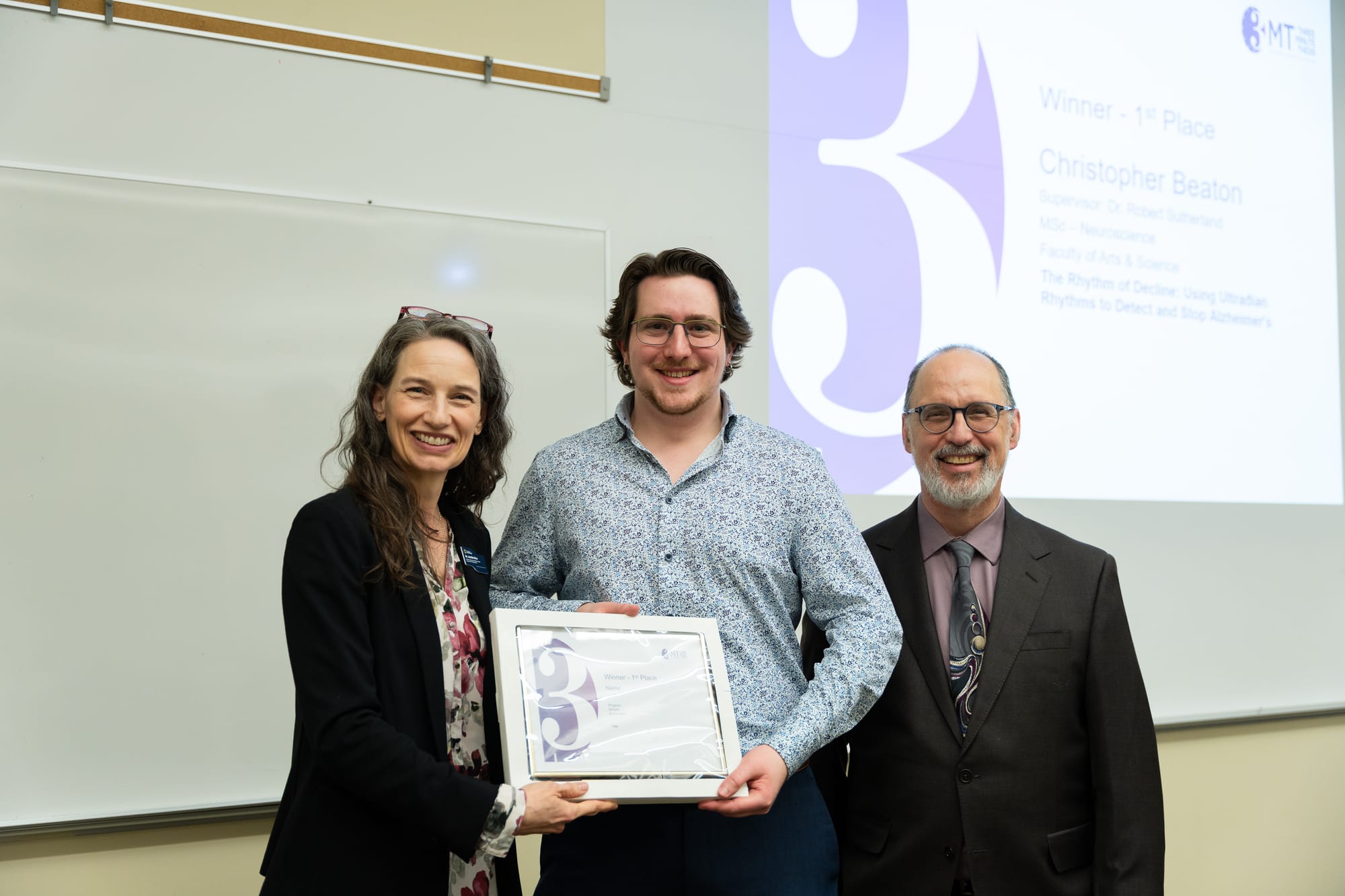
The Rhythm of Decline: Using Ultradian Rhythms to Detect and Stop Alzheimer's — First Place Award
Christopher Beaton (Supervisor: Dr. Robert Sutherland)
In my speech, I discuss how I am currently studying the ultradian rhythms of mice models using new AI tools, and how by studying these rhythms we may be able to detect Alzheimer's earlier than we are currently able to. I also discuss how these rhythms may be the key to finding a cure for Alzheimer's, by helping strengthen our brains and ward off the effects of this disease.
Christopher will represent ULethbridge at the Western Regional Three-Minute Thesis Competition at the University of Regina in Regina, Saskatchewan on May 4, 2026.
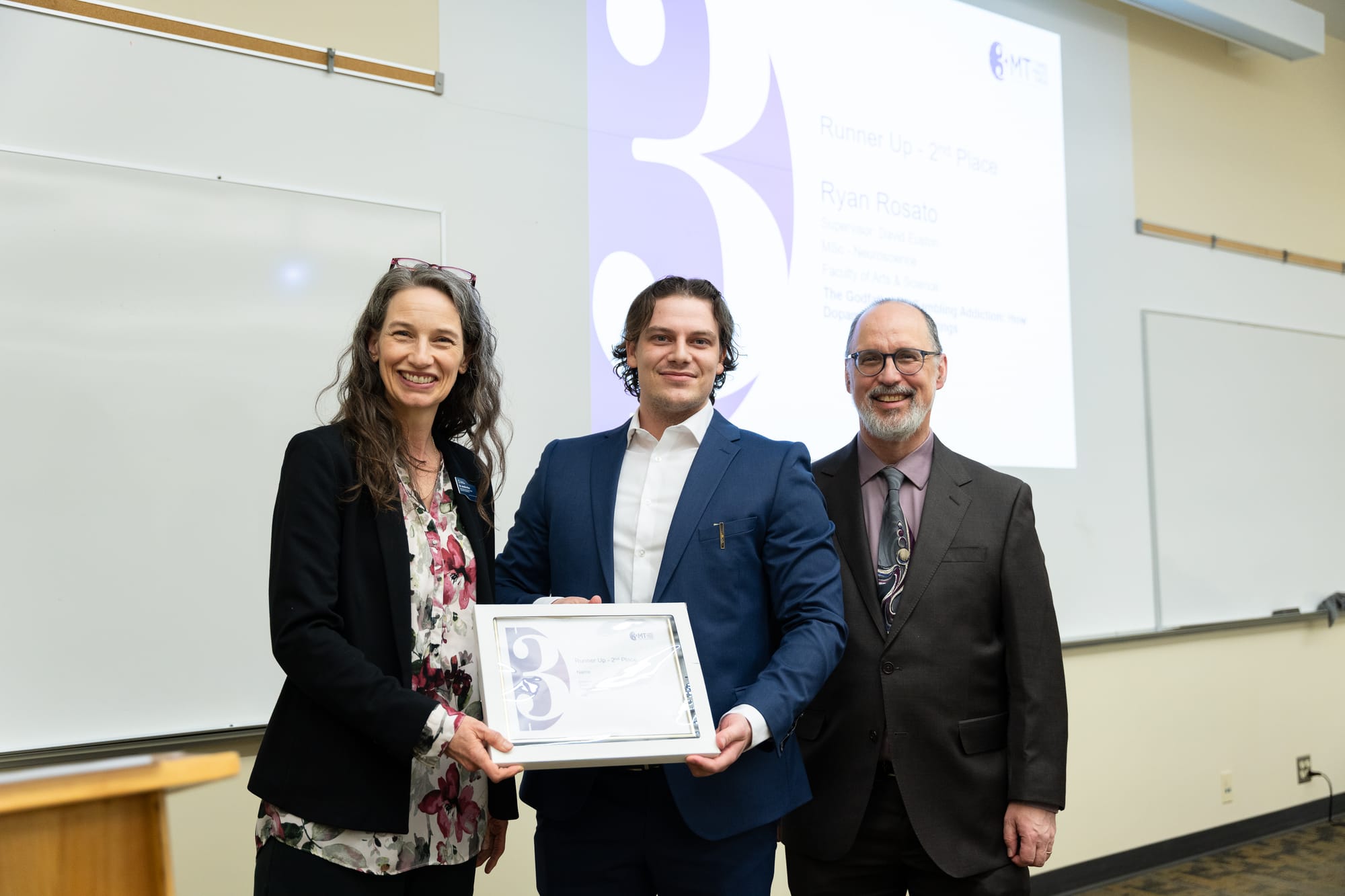
The Godfather of Gambling Addiction: How Dopamine Pulls the Strings — Second Place Award
Ryan Rosato (Supervisor: David Euston)
By highlighting the true gravity of gambling addiction and how fast it is growing, a need for a solution is required. I provide a description of my experiment while also proposing an analogy to cumulatively understand the issue at hand. I go into more detail as to the expected results of my experiment while highlighting how we can resolve these issues and provide a cure to gambling addiction. But most importantly, I aimed to illustrate the powerful and central role that is dopamine and how it not only is responsible for forming these behaviours, but also how it perpetuates them.
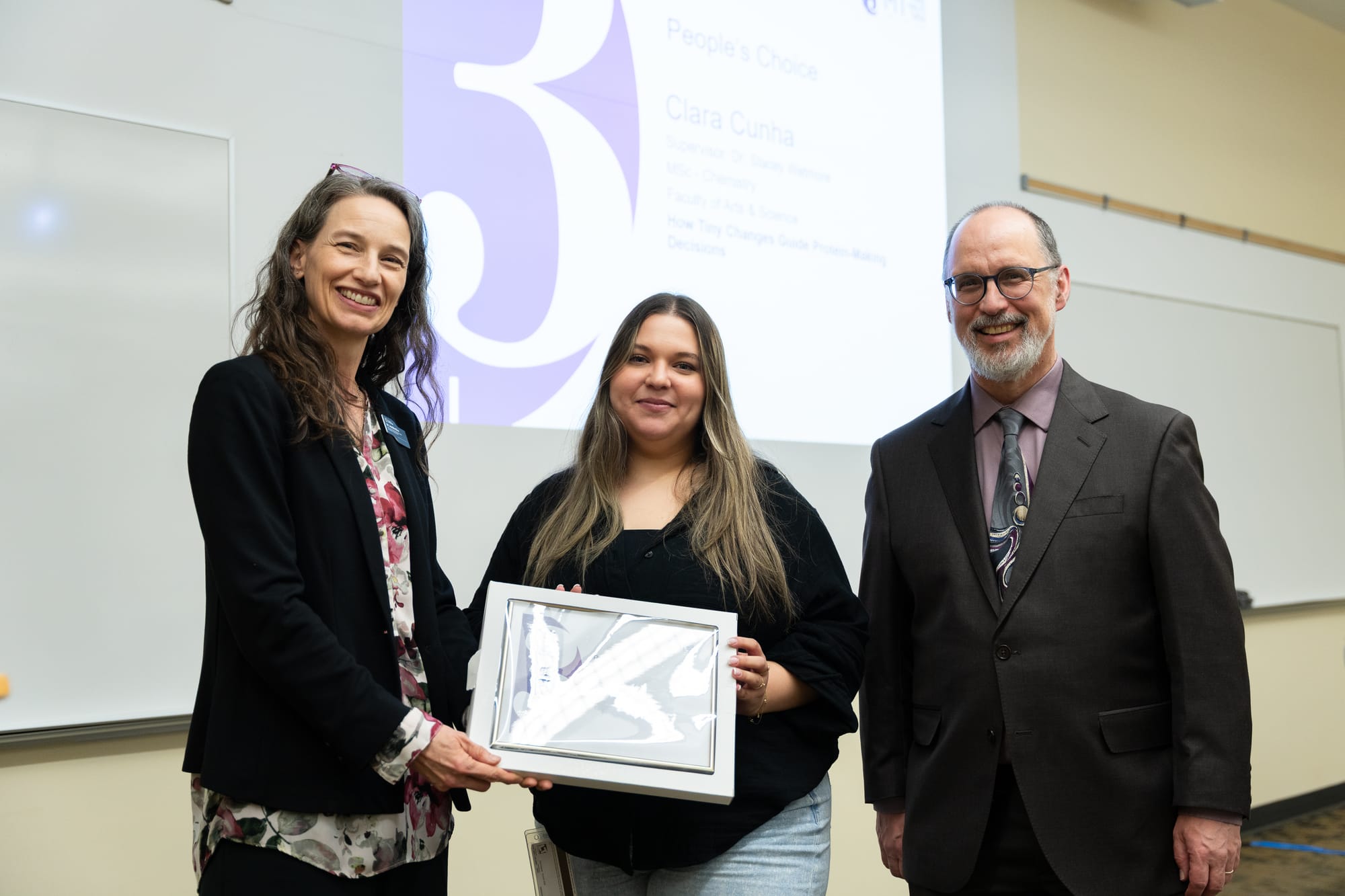
How Tiny Changes Guide Protein-Making Decisions — Third Place & People's Choice Awards
Clara Cunha (Supervisor: Dr. Stacey Wetmore)
This project investigates how small chemical modifications on transfer RNA (tRNA) influence protein production in cells. These modifications fine-tune how efficiently and accurately tRNAs interact with messenger RNA during translation. Using computer simulations, I examine how the presence or absence of a specific modification changes these molecular interactions at an atomic level. By understanding what this modification actually does, my research helps explain how cells maintain smooth and reliable protein synthesis — and how disruptions in this process can contribute to human disease.
Images of Research Award Winners
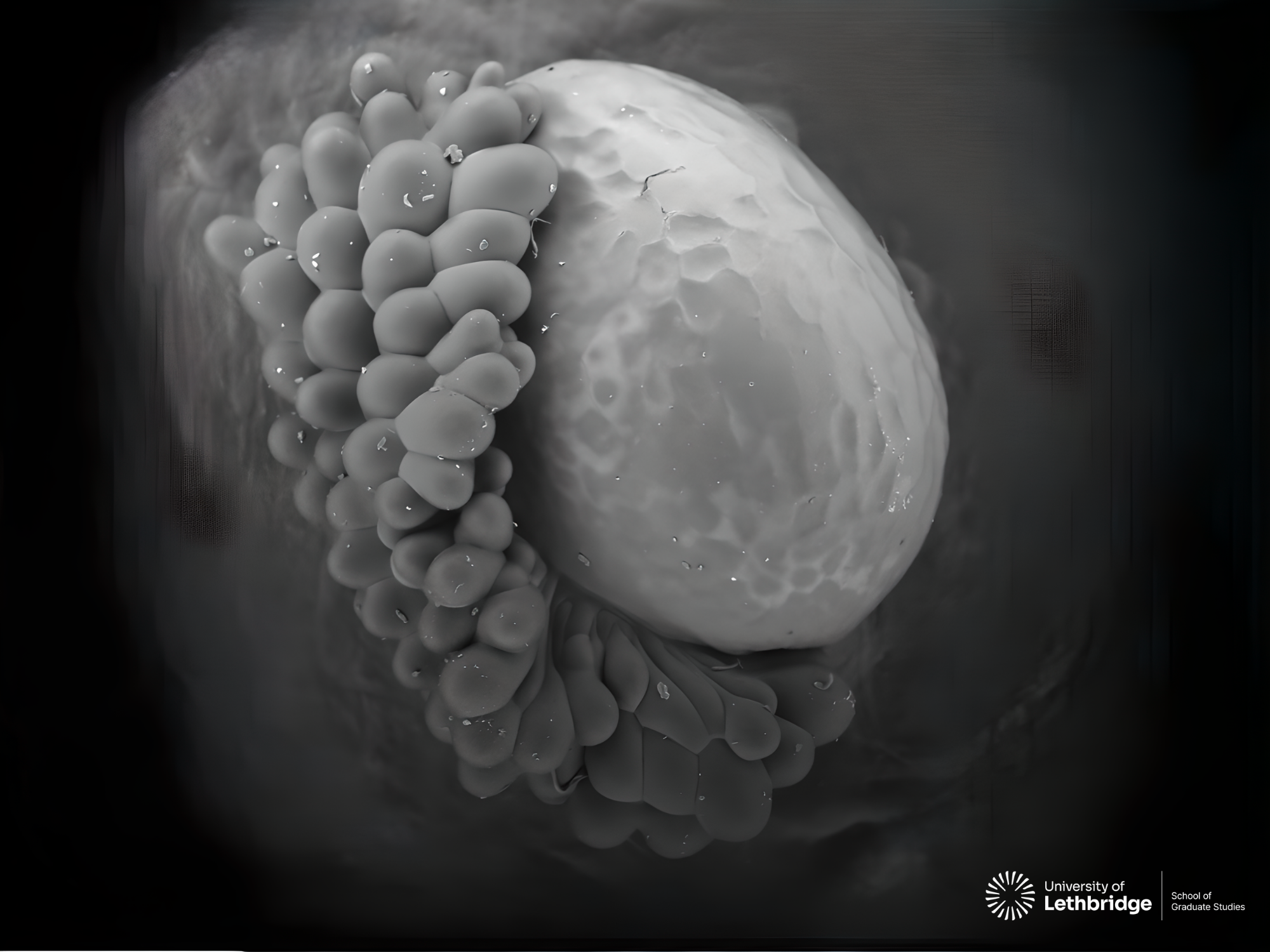
Seed's Eye View — First Place Award
Emma Neigel (Supervisor: Dr. Jenny L. McCune)
Seen at 50× magnification using a scanning electron microscope (SEM), this image reveals the seed of the endangered wood-poppy just 2 millimeters long. The football-shaped seed bears a jelly-like appendage called an elaiosome that attracts ants which disperse the seeds to new locations. Subtle variations in seed form, visible only at microscopic scales, may reflect how Canada’s four remaining populations have evolved in isolation within fragmented forests. My research tests whether genetic differences among populations are linked to trait variation such as seed morphology and plant growth using common garden experiments. Understanding these differences helps guide conservation decisions and addresses a key restoration question: should seed sources be kept separate to preserve unique adaptations, or mixed to increase genetic diversity?
Emma is a PhD student in Biosystems and Biodiversity (ecology major) in the McCune lab. She recently defended her thesis on informing rare plant conservation with experimental translocations and common garden trials. She grew up in Athabasca exploring the boreal forest and has since grown her botanical knowledge through working in the southeastern United States and Canada on rare plant conservation projects.
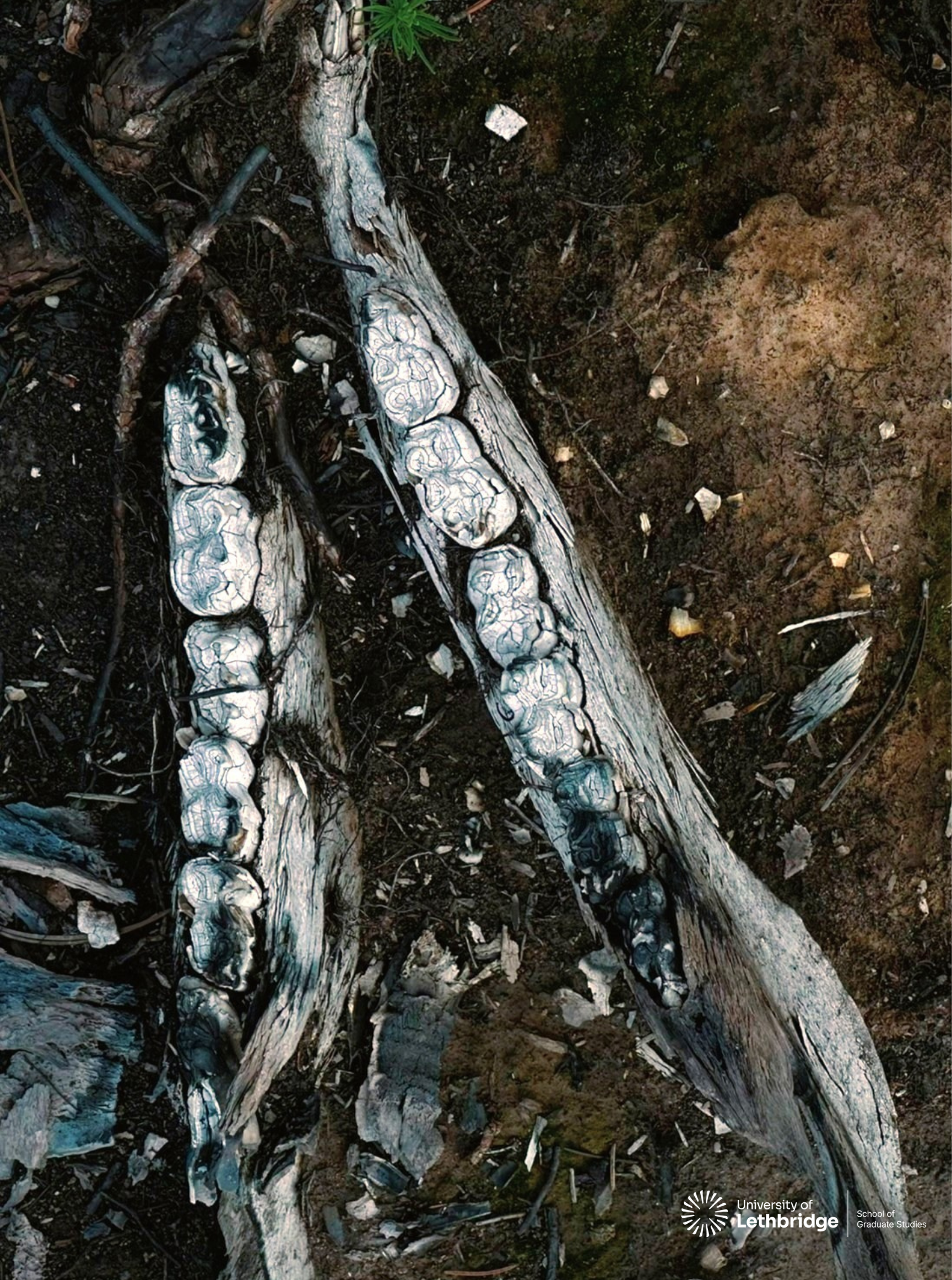
A Burnt Jawbone and a Bright Green Beacon — Second Place Award
Natalie Krizan (Supervisors: Laura Chasmer, Raphaël Chavardès, and Hester Jiskoot)
Across the charred forest floor lies the jawbone of an elk, killed by the recent wildfire in Jasper National Park. The blaze was so severe that the bone is cracked and brittle, highlighting the extreme impact of this fire. And yet, already new life is emerging. Next to the jawbone, a sapling has sprouted; a bright green beacon of forest resilience. But how do we foster that resilience? My research involves using lidar-based 3D models to determine the characteristics of areas which experienced the least severe impacts from the 2022 Chetamon Fire. These areas help to protect human communities, promote forest recovery, and act as refuge for animals, saving them from the fate experienced by this elk. By improving our understanding of these fire refugia, we can better manage forests to ensure they are speckled with those bright green beacons of resilience, even in the wake of extreme wildfires.
Natalie is a 2nd year MSc Geography student studying the 2022 Chetamon Fire in Jasper National Park. Her project involves using pre- and post-fire airborne lidar data to map forest structures and assess biomass loss due to combustion. Field work is an important part of my research, and it allowed her to see the impact of fire first-hand. It is scenes like this burned jawbone and a newly sprouted sapling, where loss and life are so adjacent, that solidify for her the importance and significance of her work.
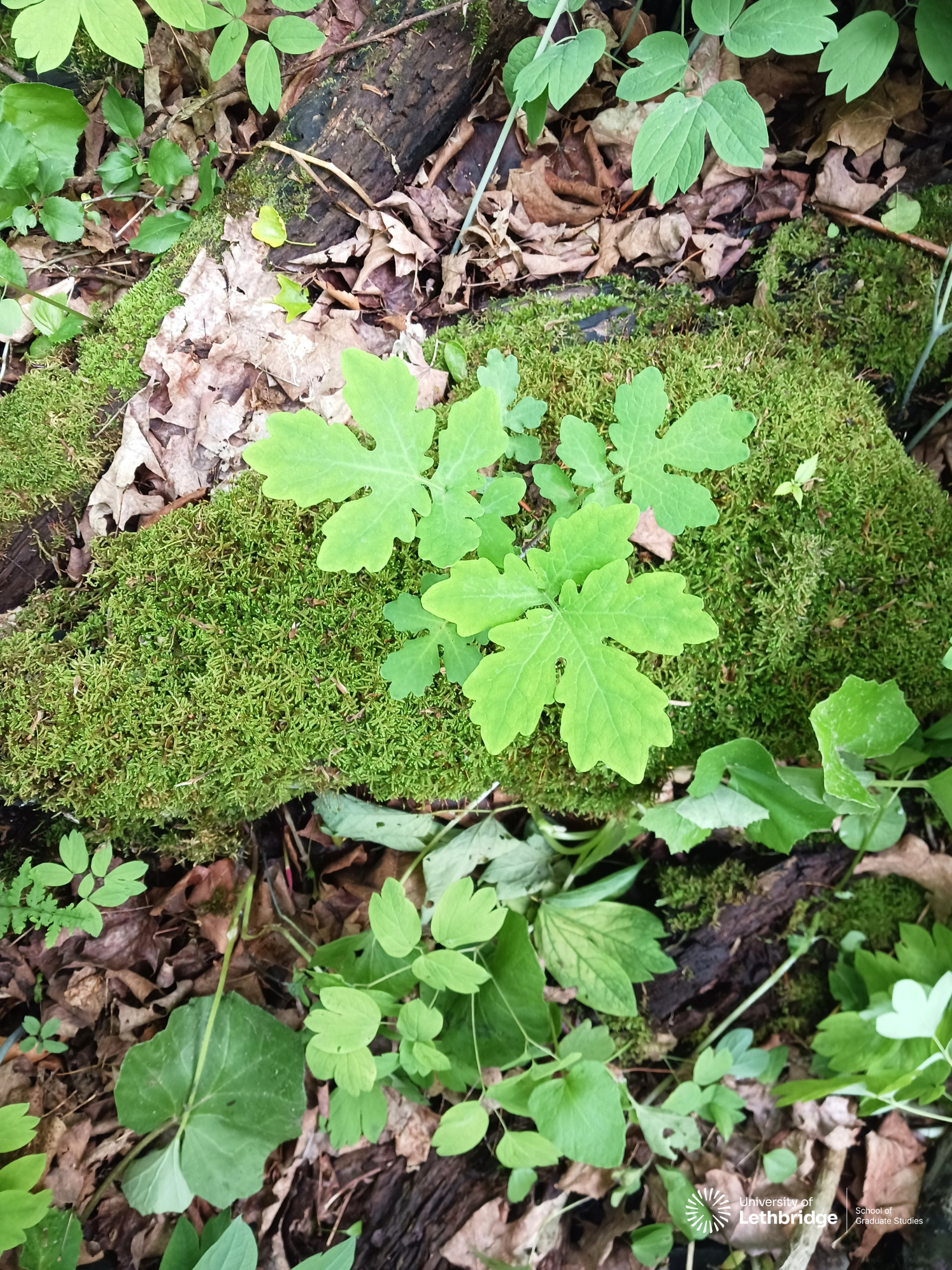
Nature Finds A Way — Third Place Award
Amy Wiedenfeld (Supervisor: Dr. Jenny McCune)
This wood-poppy (Stylophorum diphyllum) plant has survived for three years on a mossy fallen log. Survival of seedlings is an important contributor to population growth for the wood-poppy; few seedlings survive one year to become adult plants. The wood-poppy is endangered in Canada, with only five known populations, though it is not rare farther south in its range in the United States. I have been tracking individual plants, including this one, at each population for four years, and made a population model to estimate population size changes for three of the populations. I found that that they are not projected to decline, and that seedling survival is an important contributing factor for how the population sizes change. This individual plant, growing in an unusual place, has remained a favourite to observe each summer, as it continues to grow on its perch on a log.
Amy is studying the population demographics of four rare plant species in forests in southern Ontario. She made population models with demographic data from the four species to model the growth rates of each of my study populations. In addition, she is also testing for links between growth rates of two of these species to local and landscape-scale environmental factors to better understand how the environment influences the population changes in these rare plants, which will contribute both to the knowledge of these species and their conservation.
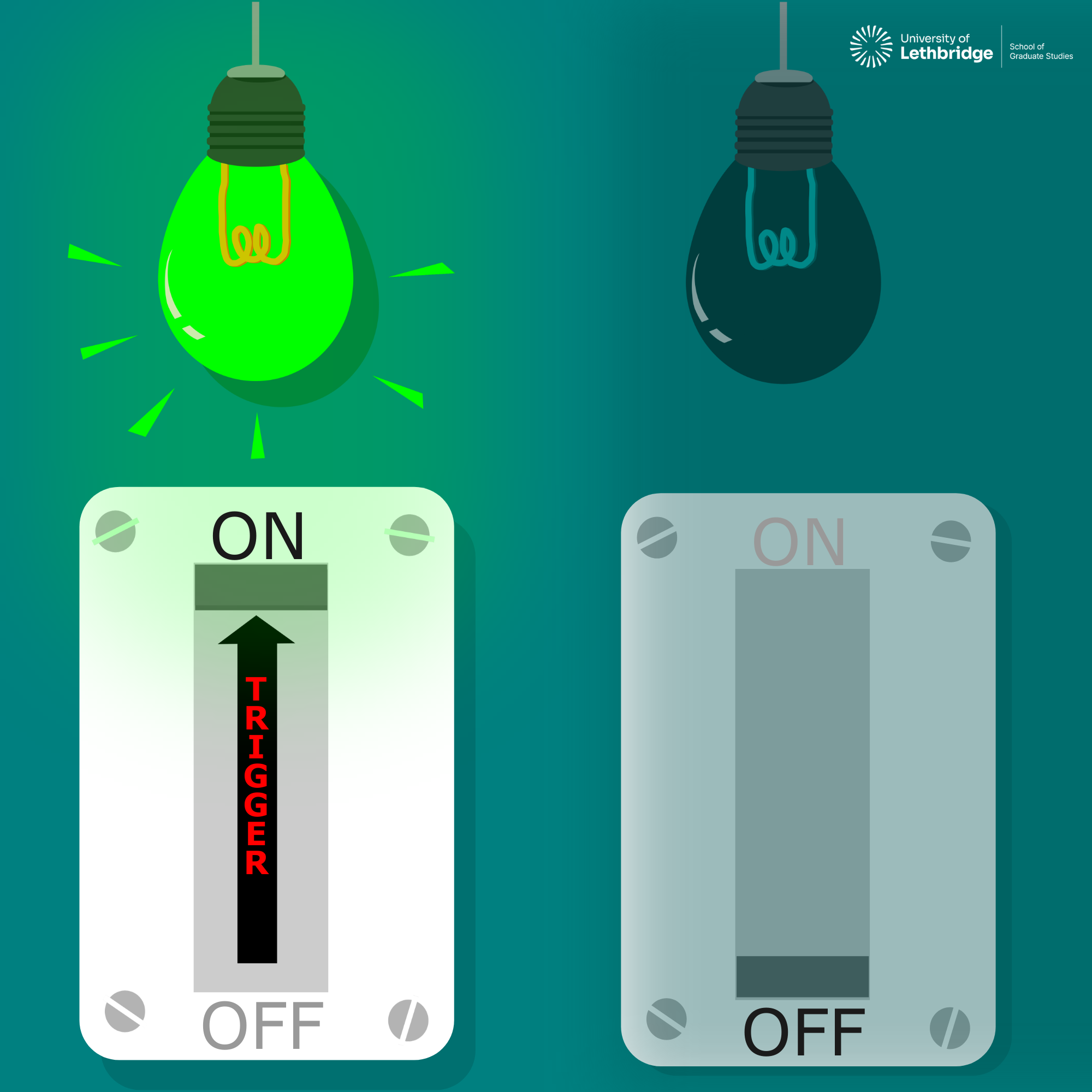
Switching Genes - People's Choice Award
Rosa Gabdullina (Supervisor: Jessica A. Willi)
A lamp waits unlit in the darkness; it will not shine without a trigger.
Beneath the soil, plant diseases hide in much the same way. Clubroot… a disease that spreads unseen and is often only discovered after the damage has already been done, once established this infection lasts for years causing significant agricultural losses. Inside a test tube, we build a molecular lamp called a toehold switch. This engineered switch remains folded and inactive until clubroot presents itself. Like a key in a lock, it binds to the switch and unfolds it, producing a visible signal. Like a lamp being lit in the darkness, warning of the disease’s presence. My research aims to bring this light out of the lab and into the field, enabling early detection to help farmers make more sustainable decisions. If this disease hides beneath the soil, will we see it in time?
Rosa is a biochemistry master’s student working in synthetic biology. Her focus is on developing a portable test for detecting “clubroot,” a soil-borne disease that infects canola and other brassica-type crops. Once soil has been infected, the pathogen is extremely difficult to eliminate, causing substantial crop loss - early detection is therefore critical. To address this problem, she intends to use toehold switches, engineered RNA molecules that remain inactive until a specific pathogen comes in contact with them, at which point they will produce a visible signal.
The competition winners were recognized with commemorative plaques and cash prizes. Three Minute Thesis winners received $1,500 for first place, $750 for second, $500 for third, and $250 for the People's Choice award. Images of Research winners received $500 for first place, $250 for second, $100 for third, and $100 for the People's Choice award.
More information about the ULethbridge Three-Minute Thesis and Images of Research competitions is available online.